







Menopause and Sexuality: What Every Woman Should Know

When the Body Rewrites the Rules
She’s been with her partner for eighteen years. Things between them are, by most measures, good. But over the past year or so, something has shifted in the bedroom — and not in a way either of them quite has the language for. Sex that used to feel effortless now requires more negotiation with her own body. There’s dryness she didn’t expect. A desire that comes and goes on its own schedule. And a quiet, background worry: Is this just how it is now?
She’s in her early fifties. She’s probably in perimenopause, or past it. And she hasn’t mentioned any of this to her doctor — partly because she wasn’t sure it was worth bringing up, and partly because nobody really told her this was something she could bring up.
That gap — between what women experience and what they’re told to expect — is exactly what this article is trying to close.
What Menopause Actually Does to Sexual Health
Menopause is defined as twelve consecutive months without a menstrual period, typically occurring between the ages of 45 and 55. But its effects on sexuality begin earlier, during the perimenopause transition, and can persist well after the final period.
The hormonal changes — primarily declining estrogen and progesterone, with testosterone also shifting — have real, measurable downstream effects on sexual function. But research has consistently shown that the picture is more complex than “low estrogen equals low libido.” According to a large body of evidence reviewed in the literature, menopause can affect desire, arousal, lubrication, orgasm, and overall sexual satisfaction simultaneously, not just one dimension at a time. A 2025 cross-sectional study confirmed that sexual function declined across all of those domains — desire, arousal, lubrication, orgasm, satisfaction, and pain — reinforcing that the impact is multidimensional, not simply hormonal.
The Numbers Are Worth Knowing
Prevalence estimates vary depending on population and how sexual dysfunction is defined, but the range is striking. Across reviewed studies, sexual dysfunction in menopausal women has been reported anywhere from 30% to 88.7%. In one 2024 cross-sectional study of sexually active middle-aged women, 30.06% met criteria for female sexual dysfunction — and that number climbed from 9.09% at ages 40–45 to 45.45% at ages 51–55, illustrating how risk increases through the transition.
More specifically, large reviews have found that low sexual desire is reported by 40%–55% of menopausal women, poor lubrication by 25%–30%, and pain with sex (dyspareunia) by anywhere from 12% to 45%. Globally, studies have found that 25%–43% of women report symptoms consistent with lack of sexual interest, and 5.4%–13.6% report persistent low desire as a frequent concern.
These numbers are not meant to be discouraging. They are meant to be clarifying. What many women experience as a personal, private, perhaps slightly shameful problem is actually one of the most commonly reported health changes of midlife — and one that medicine has increasingly good tools to address.
The Physical Changes Behind the Shift
Genitourinary Syndrome of Menopause (GSM)
One of the most underdiagnosed and undertreated conditions in menopausal women is genitourinary syndrome of menopause, or GSM. As estrogen declines, the tissues of the vagina, vulva, and urethra thin, lose elasticity, and become more prone to dryness, irritation, and microtears. The World Health Organization notes that after menopause, thinning of the vaginal wall can increase the risk of small tears and lesions during vaginal sex — and this structural change can also raise vulnerability to sexually transmitted infections if barrier protection isn’t used.
GSM doesn’t improve on its own over time. Without treatment or consistent sexual activity, symptoms tend to worsen. Pain during sex — often described as burning, tearing, or rawness — is one of its most common presentations, and it is one of the most common reasons women quietly reduce or stop sexual activity during and after menopause.
Arousal and Lubrication
The same tissue changes that cause dryness also affect arousal. Natural lubrication in response to sexual stimulation depends on healthy vaginal tissue and adequate blood flow to the genitals — both of which are influenced by estrogen. This means that the arousal process may simply take longer, require more direct stimulation, or feel less automatic than it once did. This is a physiological change, not a reflection of attraction, love, or desire for a partner.
Sleep, Mood, and the Bigger Picture
Hormonal fluctuations during perimenopause frequently disrupt sleep, and disrupted sleep affects nearly everything else — including libido, emotional regulation, and energy for intimacy. Mood changes, including increased anxiety and depressive symptoms, are also well-documented during this transition, and both are independently associated with reduced sexual interest and satisfaction.
Research has consistently found that addressing sleep, mood, and stress is part of addressing menopausal sexual health — these are not separate problems. As Emily Nagoski, PhD, whose work focuses on women’s sexual wellbeing, has written extensively: context shapes desire profoundly, and the context of midlife — often involving high stress, poor sleep, and shifting relationship dynamics — matters as much as hormones.
What the Research Says About Staying Sexually Active
Here is something that does not get said nearly often enough: staying sexually active during menopause appears to protect sexual function. A 2024 study found that women who maintained sexual activity had better sexual function across arousal, lubrication, orgasm, pain, and total scores on validated sexual function measures, compared to women who were not sexually active. They also had lower overall menopause symptom scores.
This isn’t a case for pressuring women into sex they don’t want. It is a case for understanding that the “use it or lose it” principle has real physiological grounding when it comes to genital tissue health — regular sexual activity, including solo activity, maintains blood flow and tissue elasticity in ways that matter over time.
The Emotional and Relational Layer
A 2025 meta-synthesis found that women’s experiences of menopause and sexuality are highly individualized. Some women describe menopause as genuinely liberating — sex without pregnancy concerns, a clearer sense of their own desires, less performance pressure. Others experience real distress from dryness, pain, and the feeling that their body is no longer cooperating. Many report that they received insufficient support from healthcare providers, and that their concerns were minimized or not taken seriously.
The relational context matters enormously here. Research from the Gottman Institute and the broader couples science literature consistently shows that how partners communicate about sexual changes determines a great deal of how those changes land emotionally. A shift in one partner’s desire or comfort level, met with curiosity and openness, plays out very differently than the same shift met with silence, withdrawal, or pressure.
Esther Perel, whose work focuses on desire in long-term relationships, has written that intimacy requires ongoing negotiation — that it is never simply a fixed state but something couples actively create or inadvertently neglect. Menopause is one of the moments that makes that negotiation visible. It can be a disruption, or it can be an opening.
Common Misconceptions That Need Correcting
- Loss of desire is inevitable after menopause. It is common, but it is not universal — and even when it occurs, it is often treatable. Many women remain sexually interested well into postmenopause and want to stay active.
- If sex hurts, that’s just part of aging. Pain during sex is not something to push through. It typically signals GSM or another treatable cause, and accepting it as inevitable means missing access to real relief.
- STIs aren’t a concern after menopause. This is false and potentially dangerous. The World Health Organization is explicit: STI and HIV risk continues after menopause, and the thinning of vaginal tissue may actually increase vulnerability. Barrier methods remain relevant.
- Menopause only affects hormones, not sex. As the research shows, it can affect pain, lubrication, orgasm, confidence, mood, sleep, and relationship dynamics — the whole ecosystem of sexual experience.
What Can Actually Help
First-Line Options: Low-Risk, High-Impact
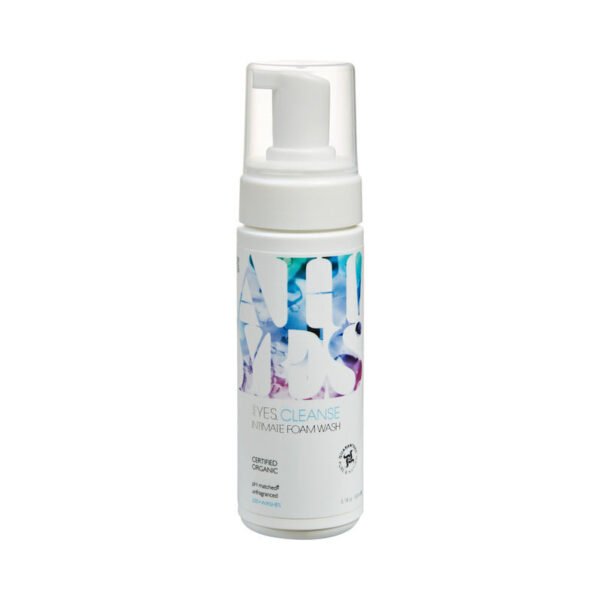
Lubricants and vaginal moisturizers are consistently recommended as first-line interventions by clinicians and organizations including the International Society for the Study of Women’s Sexual Health (ISSWSH) and the American College of Obstetricians and Gynecologists (ACOG). These are not minor workarounds — they directly address two of the most common barriers to comfortable sex: friction and dryness. Vaginal moisturizers, used regularly (not just during sex), help maintain tissue hydration over time. Water-based or silicone-based lubricants are used during sexual activity. Both are worth trying before assuming more intervention is needed.
Local Vaginal Estrogen
For women with persistent genitourinary symptoms, local vaginal estrogen — delivered via cream, ring, or suppository directly to vaginal tissue — is a well-studied, effective option. It works on tissue locally without significant systemic absorption in most cases, and it is considered appropriate for many women who may not be candidates for systemic hormone therapy. As with all medical decisions, it requires individual discussion with a healthcare provider.
Menopausal Hormone Therapy (MHT)
For women whose symptoms are more wide-ranging — affecting mood, sleep, hot flashes, and sexual function together — menopausal hormone therapy may be worth a serious conversation with a clinician. Recent guidance summarized in the literature notes that benefit is strongest when initiated within ten years of menopause onset for appropriate candidates. MHT is not appropriate for everyone, but the reflexive avoidance of it that followed older, now-contested research has left many women undertreated. The decision should be individualized, informed, and made in conversation with a provider who takes the full picture into account.
Addressing the Full Context
Sleep disruption, untreated mood changes, high stress, and relationship disconnection all influence sexual function during menopause — sometimes more than hormones alone. Working on sleep hygiene, getting support for anxiety or depression if it’s present, and having honest conversations with a partner about changing needs are all part of the picture. Therapy — individual or couples-focused — can be a valuable resource for the relational dimensions of this transition.
Practical Takeaways
- Name what you’re experiencing to your healthcare provider. Research shows many women do not volunteer concerns about pain, dryness, or desire — and many providers don’t ask. Be specific: pain during sex, reduced lubrication, changes in desire, orgasm difficulty. These are medical symptoms with medical options.
- Start with lubricants and vaginal moisturizers. These are low-risk, readily available, and genuinely effective for many women. Use a moisturizer regularly, not just when sex is planned.
- Don’t stop sexual activity — including solo activity — because sex has become uncomfortable. Addressing the discomfort (often with lubricants, moisturizers, or local estrogen) and staying active supports tissue health over time.
- Have the conversation with your partner. Not once, as a difficult announcement, but as an ongoing dialogue. What feels different, what you want more of, what you want to try — these conversations, though not always easy, tend to strengthen intimacy rather than threaten it.
- Ask about all your options before assuming you’ve hit a ceiling. Local vaginal estrogen, systemic MHT, pelvic floor physical therapy, and sex therapy are all legitimate resources — not last resorts.
- Reframe what you’re expecting from sex. Menopause sometimes prompts a natural shift in what desire feels like, how arousal works, and what kinds of stimulation feel good. Working with those changes, rather than against them, tends to be more productive — and more pleasurable.
Menopause changes the body. That’s not in question. But the story that ends there — with loss, with diminishment, with resignation — is not the whole story, and it’s not the one the evidence tells. Many of the most significant changes are addressable. Many women navigate this transition and find sexual lives that feel, on balance, good. The difference often comes down to information, access, and the willingness to say out loud what’s actually going on.
That’s always worth starting with.