


Article
Beginner Butt Plug Guide: What a Butt Plug Is, How It Works, and How to Use One Safely04/26/2026

Deals
Bestsellers
+38
Most-Loved Picks
Customer favorites for comfort, care, and everyday pleasure
Shop BestsellersSale · up to 40% off

+880
Soft Savings
Limited-time offers on body-safe essentials and feel-good favorites
View SaleSeasonal edit


+265
Seasonal Comfort Edit
Curated picks for holidays, date nights, gifting, and cozy nights in
Explore the EditFeatured
 Discreet Packaging
  Secure Checkout
  Body-Safe Materials
 Large condoms are standard-width condoms scaled up, typically starting around 57 mm nominal width and running through XL and XXL sizes, with a roomier shaft and sometimes a flared shape to reduce constriction without sacrificing the snug base that keeps everything in place.
Two things actually drive the decision: nominal width and material. Nominal width tells you more than length does, so check that number first. Material determines compatibility: latex options pair with water-based or silicone-based lubricants only, while polyisoprene and polyurethane non-latex options suit anyone with a latex sensitivity and work the same way with lube.
Large condoms come in several distinct varieties, and the best fit depends on material preference, sensation priorities, and how the condom is going to be used. Here is a plain breakdown of the main types.
Large latex condoms are the most widely available type, made from natural rubber latex and sized up from the standard 52 mm nominal width. They suit most people well and pair with water-based or silicone-based lubricants. Anyone with a latex allergy or sensitivity should skip this type entirely and look at the non-latex options below.
Large non-latex condoms are made from polyisoprene or polyurethane, making them the practical choice for anyone with a known or suspected latex allergy. Polyisoprene is soft and stretchy, with a feel many people describe as closer to latex than polyurethane is. Both materials work with water-based and silicone-based lubricants.
XL and XXL condoms are sized beyond standard large, with nominal widths typically starting around 60 mm and going up from there. They suit people who find that even regular large condoms feel tight or tend to bunch. The tapered base common in this size range helps keep the condom securely in place despite the roomier shaft.
Large thin condoms prioritize sensation by using a thinner wall construction while still offering the same roomier fit. Thinner does not mean less reliable in a well-made condom; all FDA-cleared options are electronically tested regardless of wall thickness. This type suits people who want a more natural feel without compromising on size.
Large lubricated condoms come pre-coated with either a water-based or silicone-based lubricant, which reduces friction and makes them more comfortable to put on and use. Most large condoms on the market are pre-lubricated, but the amount and type of lubricant varies by brand. If extra lubrication is needed, a compatible personal lubricant can be added, as long as it matches the condom material.
Large textured condoms feature ribbing or a studded surface, usually concentrated toward the tip or along the shaft, to add sensation for one or both partners. They are otherwise identical in construction to standard large condoms, with the same fit and material considerations. This type is worth considering when sensation is a priority alongside a comfortable, well-fitting size.
Large condoms for sensitive skin are typically spermicide-free and made from materials with minimal additives, which reduces the risk of irritation for people who react to common condom chemicals. Polyisoprene options are a frequent choice here, since they are free from natural rubber proteins. Anyone prone to irritation should also check that the pre-applied lubricant is fragrance-free and free from glycerin or parabens.
The right large condom comes down to a few practical details: nominal width, material, and how the condom is shaped at the base. Getting those three things right means a better fit, more comfort, and protection you can rely on when used as directed.
Beyond size, there are a handful of other factors worth thinking through before you buy, especially if you have a latex sensitivity, a lube preference, or a specific sensation goal.
The table below compares a selection of large condoms across key spec points to help you weigh your options side by side.
| Product | Material | Size | Key Feature | Pack Format | Made In |
|---|---|---|---|---|---|
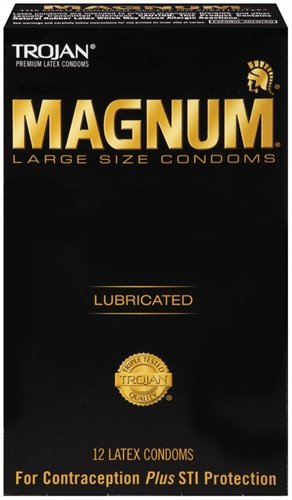
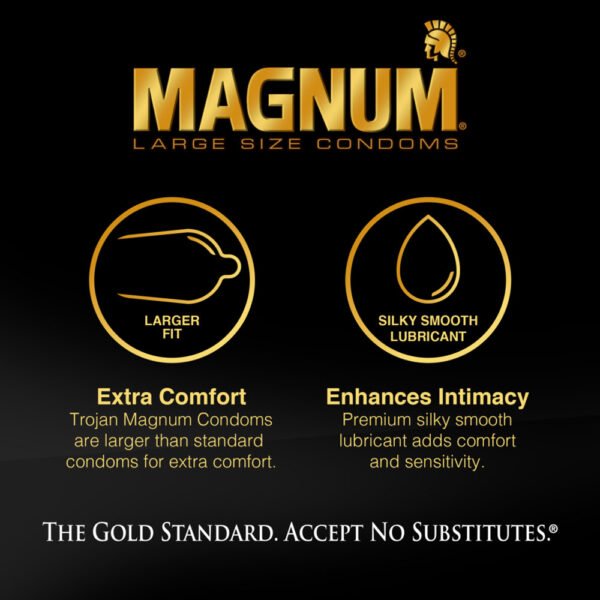
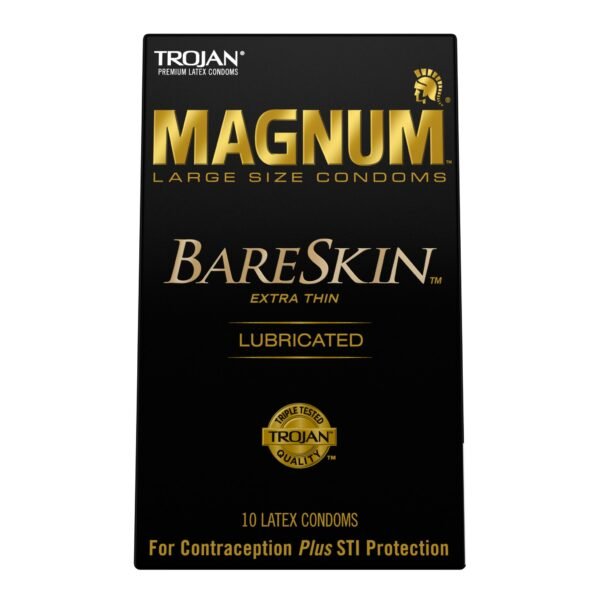
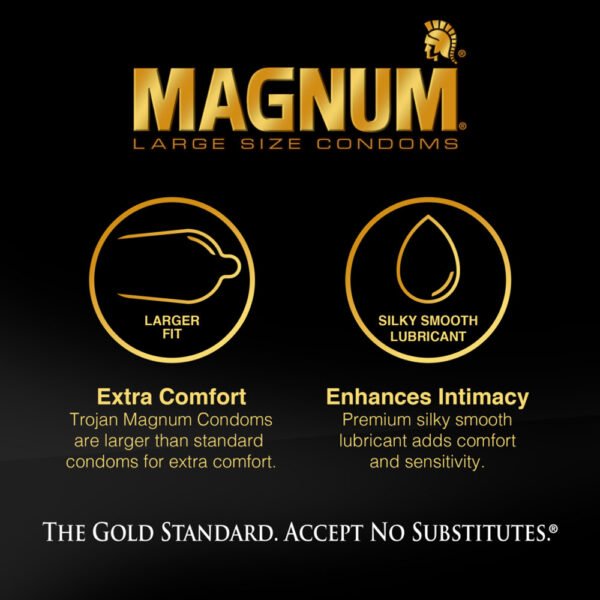
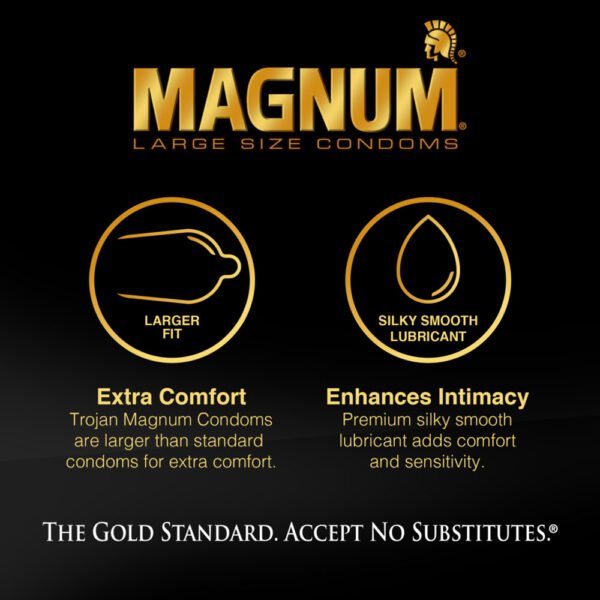
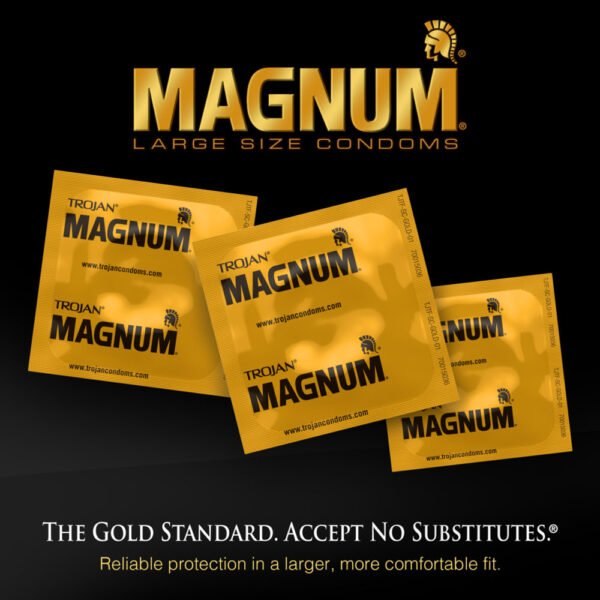
| Trojan Magnum Large Size Lubricated Condoms, 12 Pack | Latex | Large | Tapered base, reservoir tip, silky smooth lubricant | 12-pack | USA |
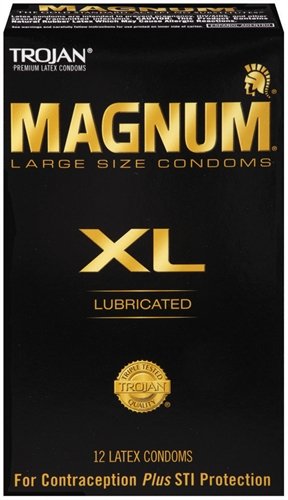
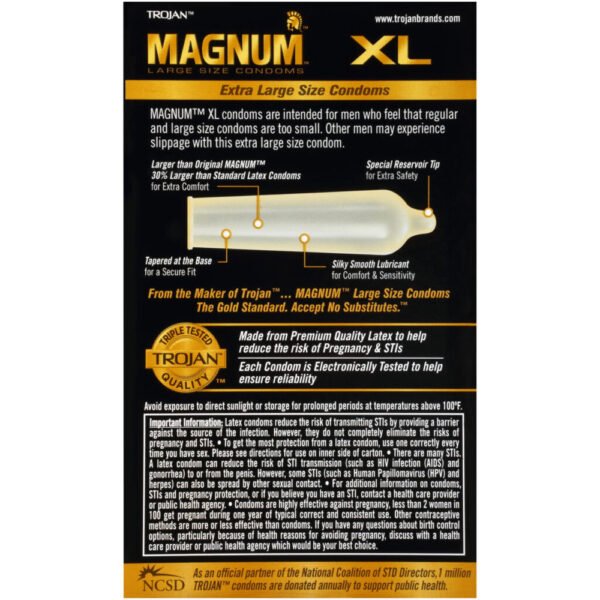
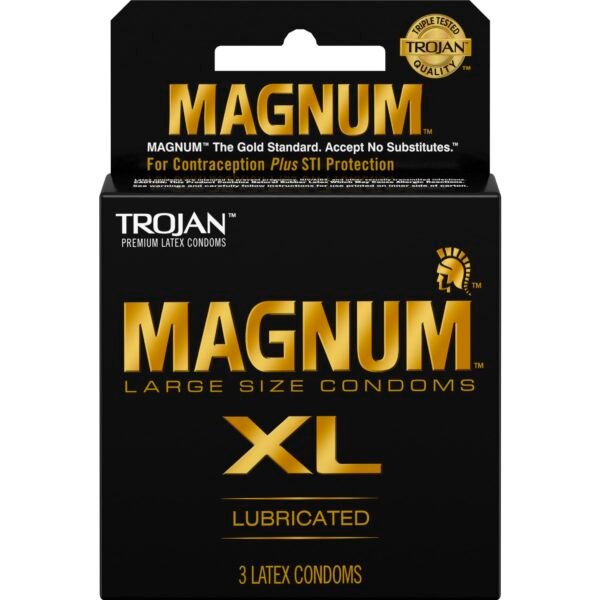
| Trojan Magnum XL Latex Condoms, 12 Pack | Latex | XL (30% larger than standard) | Tapered base, extra-large fit, silky smooth lubricant | 12-pack | USA |
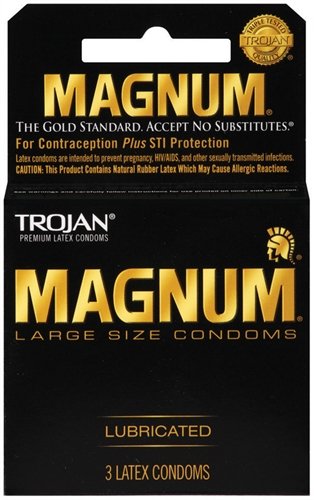
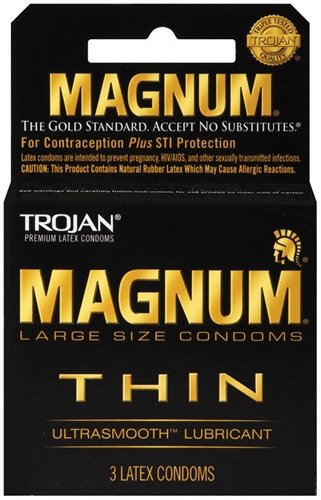
| Trojan Magnum Thin Lubricated Large Size Condoms, 3 Pack | Latex | Large | Thinner wall than standard Magnum, tapered base | 3-pack | USA |
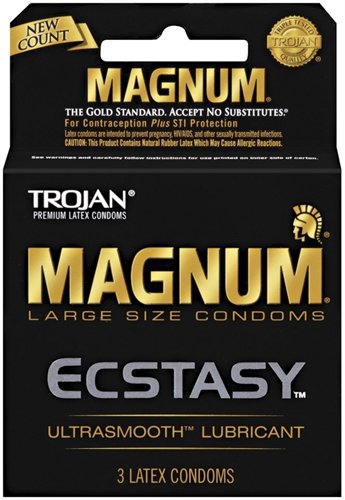
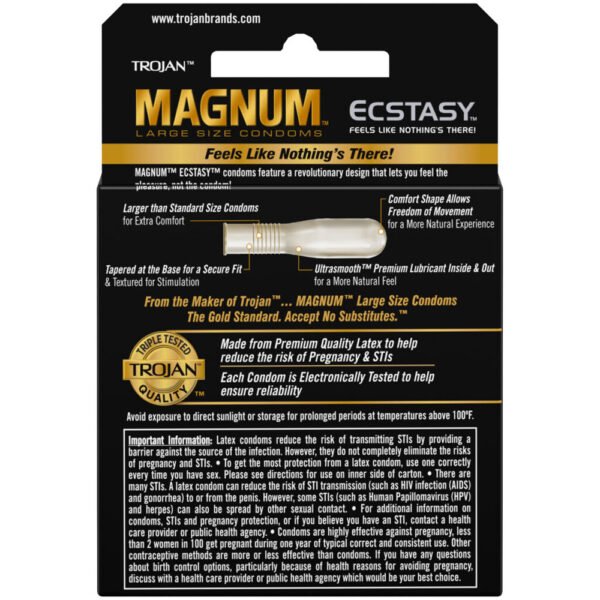
| Trojan Magnum Ecstasy Lubricated Condoms, 3 Pack | Latex | Large | Comfort shape, lubricated inside and out, freedom of movement | 3-pack | USA |
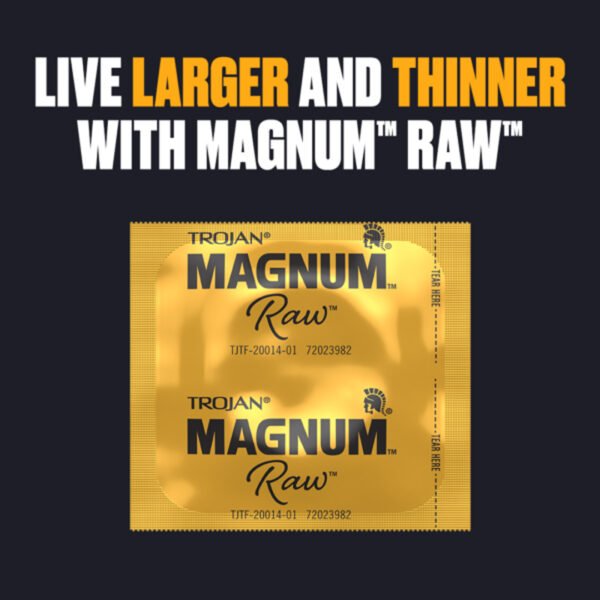
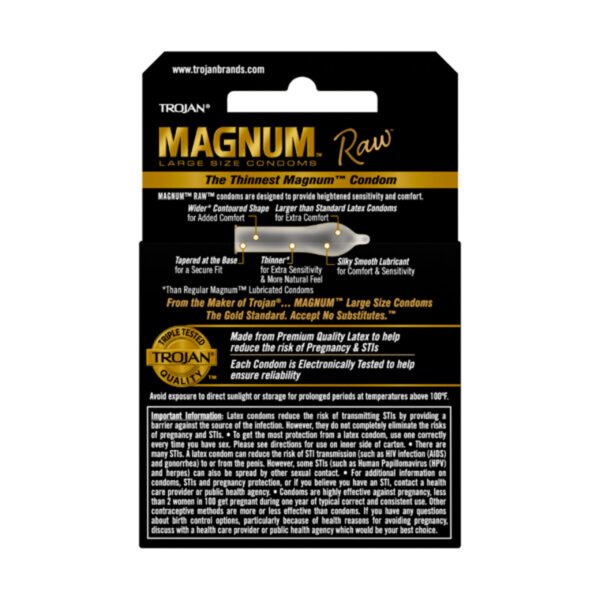
| Trojan Magnum Raw Latex Condoms 3 Count | Latex | Large | Contoured shape, tapered base, electronically tested | 3-pack | Thailand |
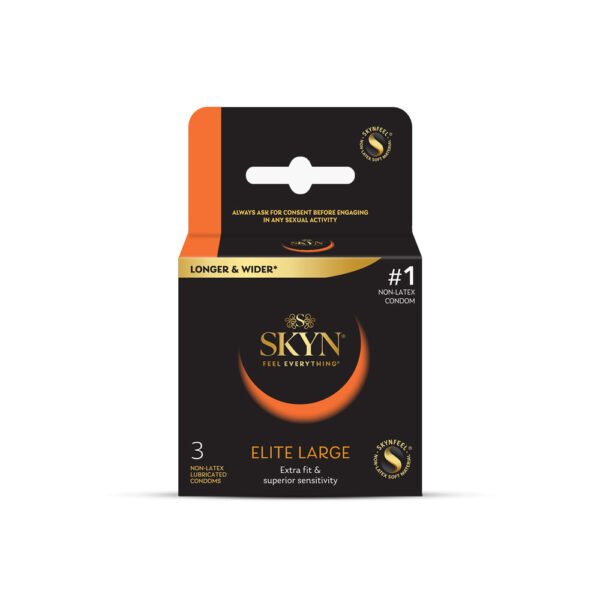
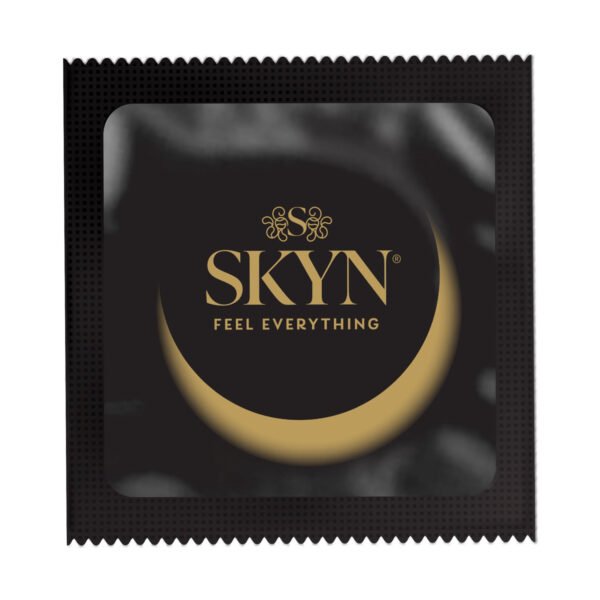
| Lifestyles Skyn Large Condoms, 3 Pack | Polyisoprene (non-latex) | Large | Soft, natural feel; ultra-smooth lubricant; latex-free | 3-pack | Thailand |
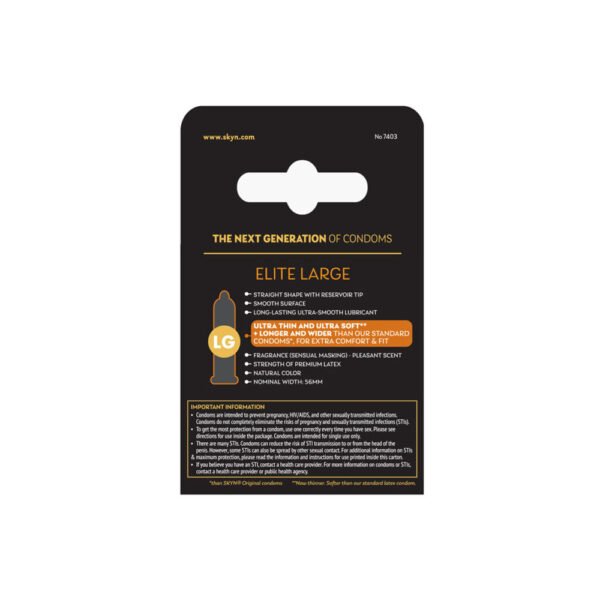
| Skyn Elite Large Non-Latex Polyisoprene Condoms, 1008 Pieces | Polyisoprene (non-latex) | Large | 15% thinner than Skyn Original, ultra-soft, latex-free | 1008-piece bulk fishbowl | Thailand |
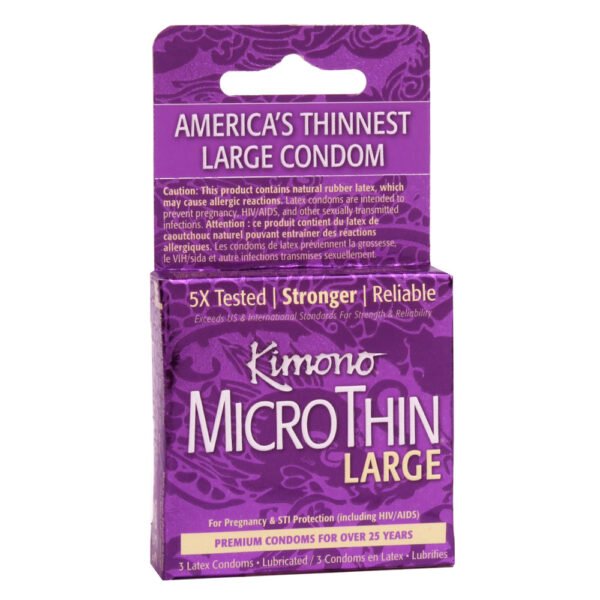
| Kimono Microthin Large Condoms, 3 Pack | Latex | Large | Ultra-thin construction, pre-lubricated, natural feel | 3-pack | Japan |
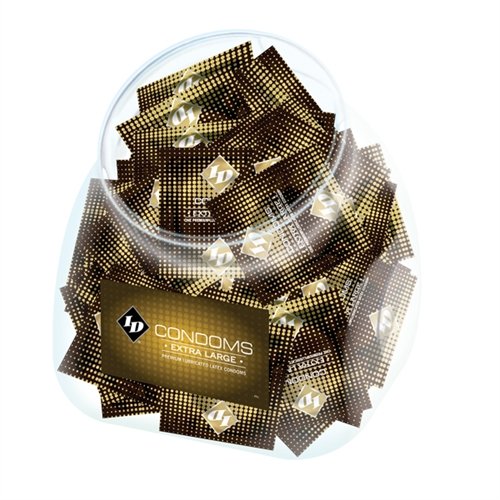
| ID Extra Large Lubricated Condom Jar, 144 Pieces | Latex | XL | Pre-lubricated, bulk counter/fishbowl jar format | 144-piece jar | Thailand |
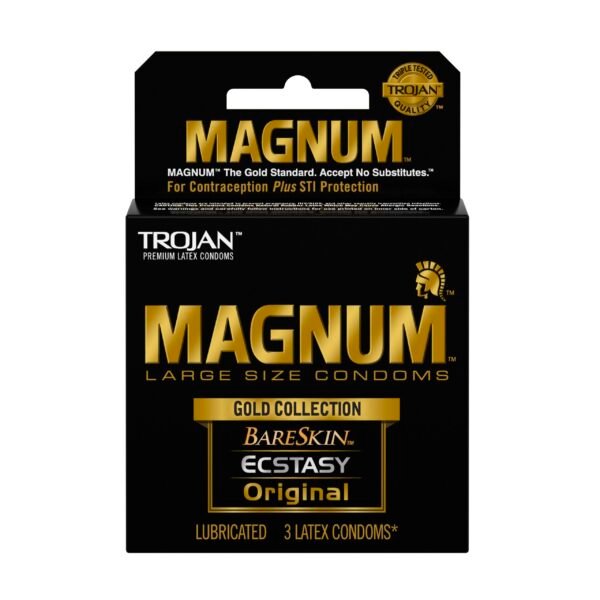
| Trojan Magnum Large Size Gold Collection Condoms, 3 Pack | Latex | Large | Variety pack: Bareskin (thinnest), Ecstasy (comfort shape), Original | 3-pack assortment | Thailand |
If you are working out which lube to pair with your condoms, the water-based lubes category is a reliable starting point: they are compatible with every condom material listed above.
For the full selection, explore our Condoms.
Large condoms cover more ground than one size label suggests. These curated collections make it easier to find the right fit for your material preference, sensation goals, or everyday protection routine.
Large condoms work as intended when used consistently and correctly from start to finish, including before any genital contact begins. Always check the packaging for damage before opening, and leave the reservoir tip clear of air when rolling the condom on. Use as directed on the label, and pair with a compatible lubricant throughout. Oil-based lubricants break down latex and polyisoprene, so reach for a water-based or silicone-based formula instead. Non-latex options in polyurethane or polyisoprene follow the same lube rule.
Storage matters more than most people factor in. Keep condoms away from heat, direct sunlight, and sharp objects, including back pockets and glove compartments, which can degrade the material over time. Always check the expiry date before use; an expired condom is not a reliable barrier. Dispose of used condoms in the trash, not the toilet. If you experience any irritation, switching materials, such as moving from latex to a non-latex option, is a reasonable next step.
Nominal width is the single most useful number when sizing a large condom, and it refers to half the circumference of the condom laid flat, measured in millimeters. Length matters far less because condoms stretch lengthwise easily; width is where a poor fit actually shows up. To find your nominal width at home, wrap a soft measuring tape or a strip of paper around the widest part of an erect penis, note the circumference in millimeters, then divide by two. That number is your nominal width. A result of roughly 57 to 60 mm points toward standard large; 60 to 64 mm aligns with XL sizing; anything above 64 mm moves into XXL territory. If your measurement sits at the lower end of a range, start with the smaller size and adjust from there, since too wide can cause slippage just as readily as too narrow causes constriction.
A condom that is too small gives clear signals during use: a tight, pinching sensation along the shaft, difficulty rolling it down fully, or a feeling that circulation is restricted. Those are comfort issues, but fit also has direct safety implications. A condom under tension from a too-narrow fit is more likely to break or slip, either of which compromises its function as a barrier. Slippage at the base is another common sign, and it can happen with a condom that is too wide as well as one that is too narrow, which is why the tapered base found on many large and XL styles matters. If a standard condom consistently rolls back, bunches, or feels like it is working against you rather than with you, that is a practical reason to try a larger nominal width, not just a comfort preference.
Lube compatibility for large condoms follows the same material logic as any other condom, but it is worth being specific because the stakes are real. With latex large condoms, only water-based or silicone-based lubricants are safe; oil-based formulas, including coconut oil, petroleum jelly, and many body lotions, degrade the latex and compromise the barrier. Polyisoprene large condoms follow the same rule: water-based or silicone-based only. Polyurethane is more chemically stable and generally tolerates a wider range of lubricants, though water-based remains the safest default across all materials. One practical note on silicone-based lubricants: they are fully compatible with both latex and non-latex condoms, but they should not be used with silicone sex toys, since they can degrade the toy’s surface. Pairing your personal lubricant choice with the right condom material takes about ten seconds to check and keeps everything working as intended.
Some large condoms are made without casein, a milk-derived protein used in traditional latex processing, making them suitable for vegans. Non-latex options in polyisoprene or polyurethane are often vegan by default, since they skip animal-derived processing aids entirely. If this matters to you, check the product description or packaging for an explicit vegan or casein-free label, since not all latex condoms are processed the same way.
Large latex and polyisoprene condoms are fully compatible with silicone-based lubricants, since silicone does not degrade those materials the way oil does. Polyurethane condoms are also generally compatible with silicone-based formulas. The pairing to avoid is silicone lube with silicone sex toys used alongside a condom, since silicone-on-silicone contact can affect toy surfaces, though the condom itself remains unaffected.
At Claim Night, every order ships in plain, unmarked packaging with no product descriptions on the outside. Your billing statement shows “XR. LLC” rather than any store or product name. What you ordered stays between you and your inbox.
Condoms are not a restricted item and can travel in carry-on or checked luggage without any issue at TSA checkpoints. The main thing to watch is temperature: prolonged exposure to heat in a checked bag stored in a cargo hold, or left in a hot car, can degrade the material before you even open the wrapper. A small toiletry pouch kept in your carry-on is a more reliable option for keeping them in good condition.
Natural rubber latex has a mild, distinctive scent that some people notice more than others. Non-latex options in polyisoprene or polyurethane tend to be more odor-neutral, which is one reason some people prefer them even without a latex allergy. Many brands now offer odor-minimized latex formulations as well, so if scent is a factor, it is worth checking the product notes before you buy.
The pre-applied lubricant on most large condoms is water-based or silicone-based, and water-based formulas rinse out of fabric easily. Silicone-based lubricants can leave a light residue on some fabrics and may require a small amount of dish soap to lift fully. Latex itself does not typically stain, though any lubricant that makes contact with delicate or light-colored fabric is worth rinsing promptly.
Completely normal, and worth naming directly: buying the size that actually fits is a practical health decision, not a statement about anything else. Shopping online removes the in-store moment entirely, and at Claim Night there is no judgment in either direction, whether this is your first order or your fiftieth. The goal is a condom that works well for you, and that is the only thing worth focusing on.
Large external condoms and internal condoms are used separately, never together at the same time. Using two barrier methods simultaneously creates friction between them, which increases the risk of slippage or failure rather than adding protection. Each type is designed to be used on its own, and both offer reliable barrier protection when used as directed.

Helpful guides, product tips, and simple explanations to help you find what feels right.
No account yet?
Create an Account