








The A-spot, formally called the anterior fornix erogenous zone (AFE zone), is a pressure-sensitive area located on the front wall of the vagina, deep past the G-spot and just in front of the cervix. Stimulating it can produce rapid lubrication and, for some people, intense orgasmic sensation, even in people who rarely or never orgasm from penetration alone.
The term was introduced by Malaysian researcher Chua Chee Ann in a 1997 study published in the Sexual and Marital Therapy, which documented that direct stimulation of this zone triggered vaginal lubrication responses faster than stimulation at other internal sites. It is one of the less mainstream erogenous zones, but real, studied, and for plenty of people, worth knowing about.
Where exactly is it, and how is it different from the G-spot?
Both the A-spot and the G-spot are on the anterior (front) wall of the vagina, but they are not the same location and they do not feel identical to stimulate.
The G-spot sits roughly 5–8 cm inside, on the front wall, and has a textured, slightly ridged quality under the finger. The A-spot sits considerably deeper, approximately 10–15 cm in, near where the vaginal wall meets the cervix at the anterior fornix. Because of that depth, most fingers cannot reach it without effort, and most standard-length toys cannot reach it at all.
The functional difference matters too. G-spot stimulation tends to feel like building pressure that can become intense or urge-to-urinate-adjacent. A-spot stimulation is often described as a deep, spreading warmth, with lubrication that appears faster than typical arousal would explain. Not everyone has a strong response there, and individual anatomy varies considerably, but the mechanism is real: the tissue in that area is richly innervated and connected to the same pelvic nerve network that underpins orgasmic response.
What does stimulation actually feel like?
Responses vary. Some people report immediate, almost startling lubrication when the A-spot is contacted, even before full subjective arousal catches up. Others describe a deep, diffuse pleasure that is different in character from clitoral stimulation: less localized, more full-body. Some find it uncomfortably intense without sufficient arousal; others find it flat.
A few things the research and reported experience suggest:
- It is depth-dependent. You need to actually reach the anterior fornix, which requires either a long toy, a partner with length and the right angle, or a position that changes the geometry of the vaginal canal (the vagina tents, expands internally, with arousal, which can shift access).
- Arousal state matters more here than with the G-spot. Cold contact at depth is more likely to feel uncomfortable or produce no response. Sufficient arousal before targeting the A-spot changes the tissue response substantially.
- Pressure, not vibration, is the primary stimulus. Unlike the clitoris, which responds well to vibration, the A-spot is primarily responsive to firm, sustained pressure or slow movement. Vibration can help with arousal, but the zone itself responds to direct contact and gentle rocking rather than speed.
Toys built for this: what to look for
Because the A-spot requires depth and the right angle, most standard toys fall short, literally. The features that matter:
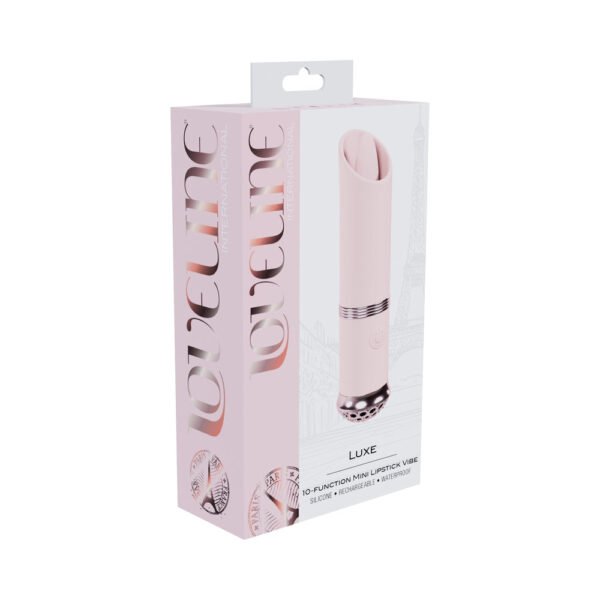
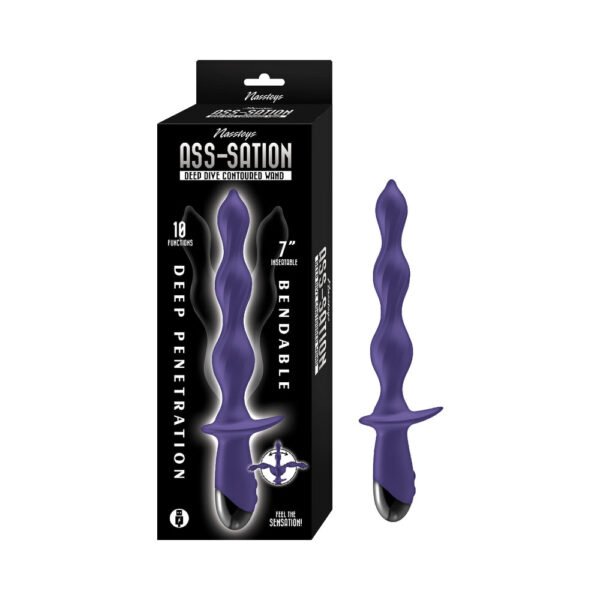
- Length. You need a toy that comfortably reaches 10–12 cm of insertable depth and has length to spare for handling. Under 5 inches of insertable length, and you are unlikely to make contact.
- A pronounced upward curve at the tip. The anterior fornix is on the front wall. A toy that curves toward the belly at the tip will make contact; a straight toy or one that curves the wrong way will miss.
- Non-porous, body-safe material. Silicone, glass, and stainless steel are the standards. They can be cleaned thoroughly between uses, hold no microbial residue, and are safe against internal mucous membranes. Porous materials like TPE or PVC are not appropriate for deep internal use.
- Not excessively wide at the base. Diameter at the tip matters more than at the base for targeting a specific deep zone. A toy with a narrow, curved head and a comfortable handle gives you better control at depth than a uniformly thick shaft.
Always use a water-based lubricant with silicone toys. Silicone-based lubes can degrade silicone toy surfaces over time. For glass or stainless steel, either water-based or silicone-based formulas work.
A note on discomfort and when to stop
Deep internal stimulation is not inherently risky, but it does require attention. The cervix is pressure-sensitive and, depending on the time of cycle, can be tender. If a toy contacts the cervix rather than the anterior fornix, the feeling is usually sharp and clearly unpleasant, that is the signal to ease off, readjust the angle, or stop. Pain is information, not an obstacle.
Some positions move the cervix away from the path of a toy: doggy-style, for example, tends to give deeper access with less cervical contact than missionary. Arousal also moves the uterus upward (tenting effect), which shifts the landscape. None of this requires memorizing anatomy; it requires going slowly enough to notice what is working and what is not.