









How to Use Kegel Balls: A Beginner’s Guide to Safe, Effective Use

Content
- What Are Kegel Balls and How Do They Work?
- Choosing the Right Kegel Balls: Size, Weight, and Material
- How to Use Kegel Balls Step by Step
- Pelvic Floor Technique and Training Progression
- Safety, Contraindications, and Warning Signs
- Pelvic Floor Benefits and Pleasure Use
- Cleaning, Drying, and Storing Kegel Balls
Kegel balls are small weighted devices worn inside the vagina to engage and strengthen the pelvic floor — and this guide covers what a first-time user needs: how to choose the right size and material, how to insert and remove them safely, correct muscle technique, and how to clean and store them properly.
- Start with a larger, lighter ball — easier to retain and gentler on new muscles.
- Body-safe materials include 100% silicone, stainless steel, and borosilicate glass.
- Always use water-based lubricant; lube type depends on your device’s material.
- Begin with 15 minutes or less per session and build wear time gradually.
- Clean before first use and after every use with mild soap and warm water.
What Are Kegel Balls and How Do They Work?
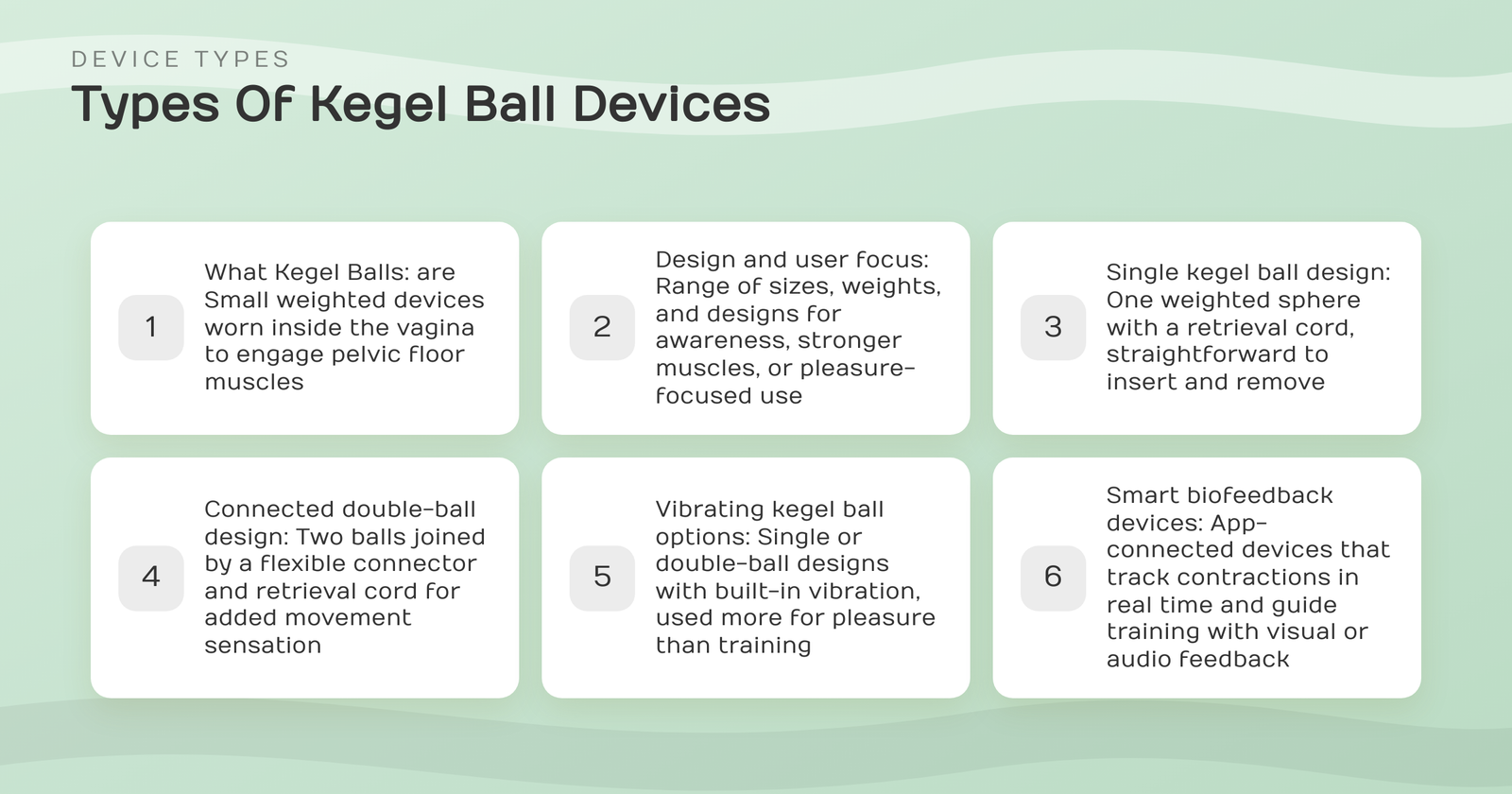
Kegel balls are small weighted devices worn inside the vagina to engage the pelvic floor muscles. They come in a range of sizes, weights, and designs, and they are made specifically for people who want to build pelvic floor awareness, work toward stronger pelvic muscles, or explore pleasure-focused use.
The mechanism is simple and largely passive. Once inserted, a kegel ball sits inside the vaginal canal and the pelvic floor muscles respond to its weight by gently contracting to hold it in place. This is called passive weighted resistance: the body does the work automatically, without you having to think about it, simply by standing or moving around. Some people pair this with intentional squeeze-and-lift contractions, actively engaging and releasing the pelvic floor in a contract-and-relax cycle to build more deliberate muscle control. The two approaches can work together.
Kegel balls are sometimes confused with Ben Wa balls, and the names are often used interchangeably. Technically, Ben Wa balls are the older, traditional form: small, smooth, solid metal or weighted spheres with no retrieval cord. Modern kegel balls evolved from that design and typically add a retrieval cord or removal loop as a key safety feature, along with softer materials and a more structured shape. Vaginal cones and vaginal weights are closely related form factors used in clinical pelvic floor training; they work on the same weighted-resistance principle but are shaped differently, often like a cone or cylinder.
Within the broader kegel ball category, you will find several form factors:
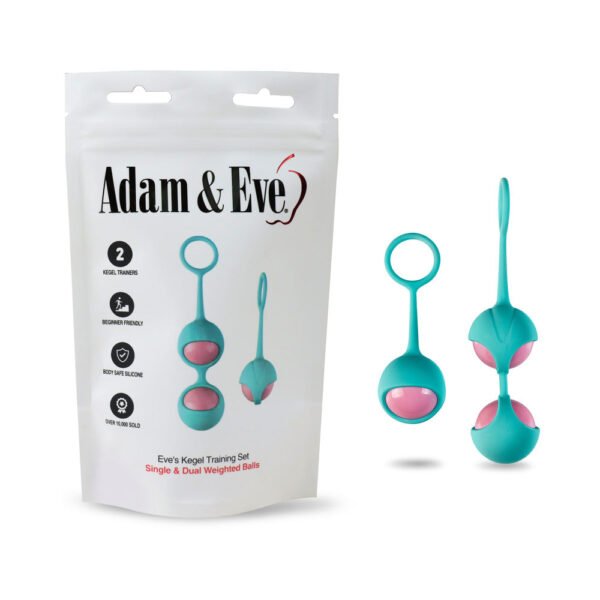
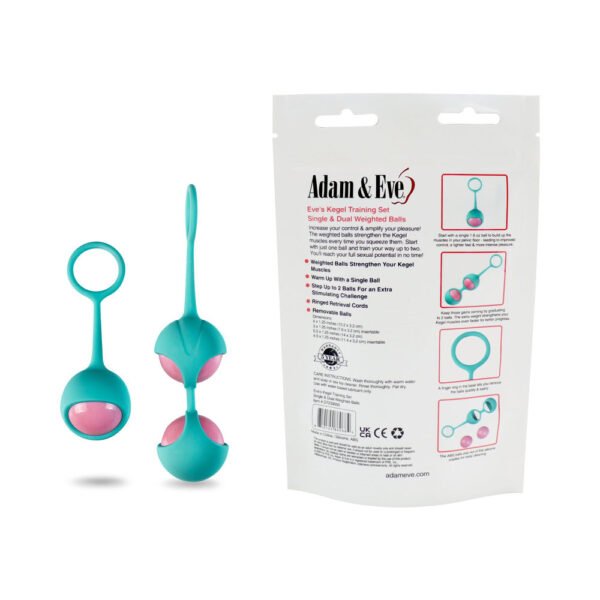
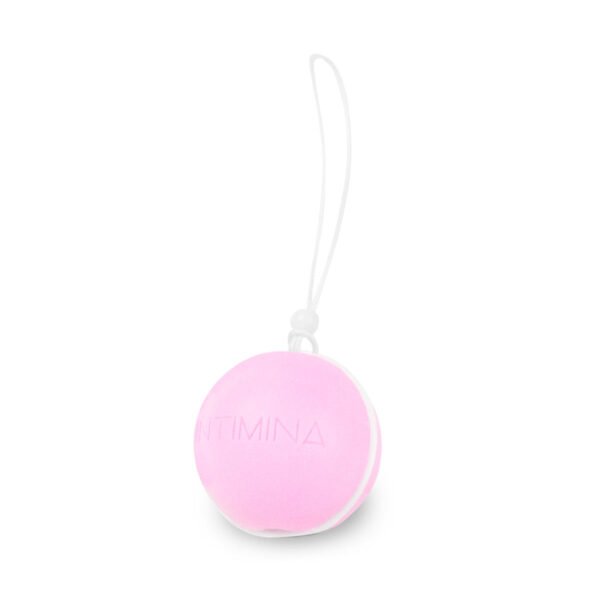
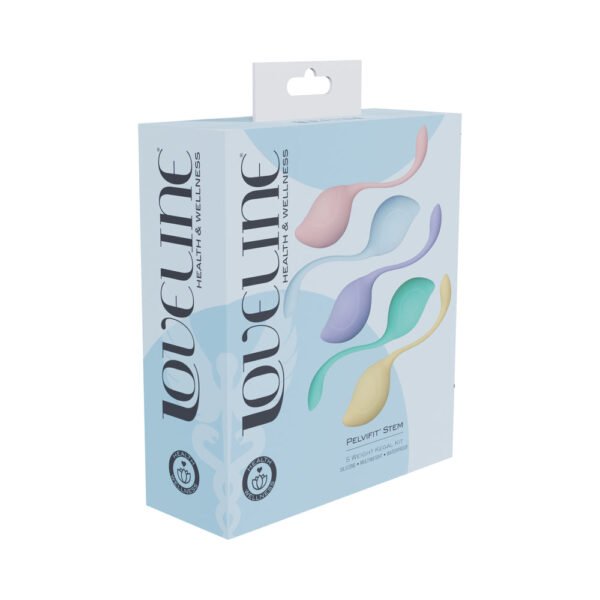
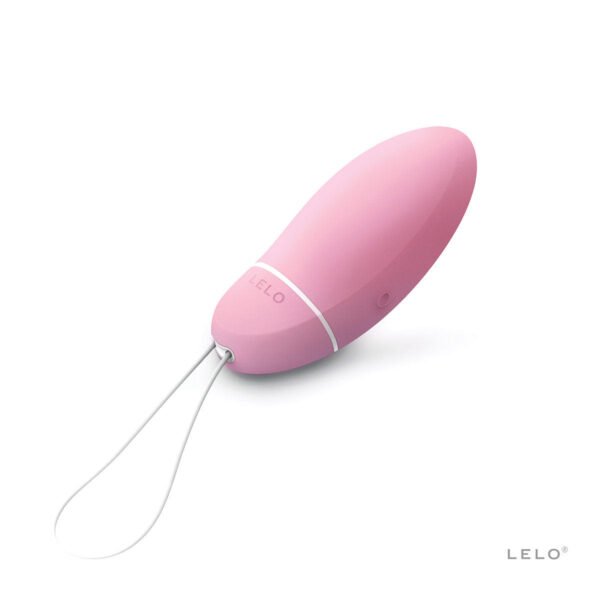
- Single kegel ball. One weighted sphere with a retrieval cord. The most beginner-friendly option because it is straightforward to insert and remove.
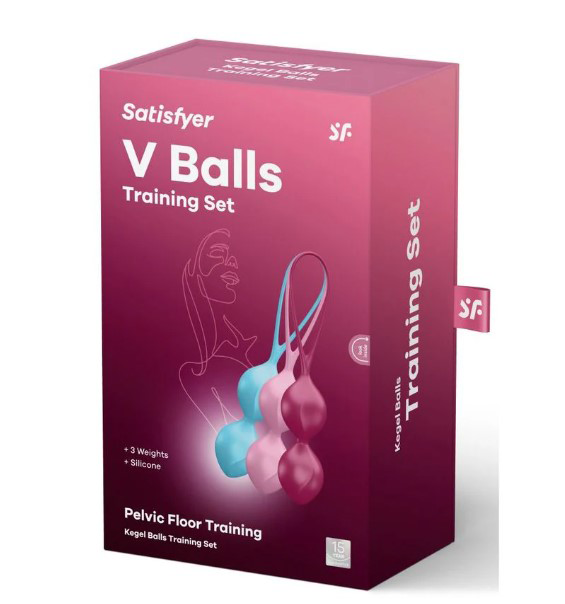
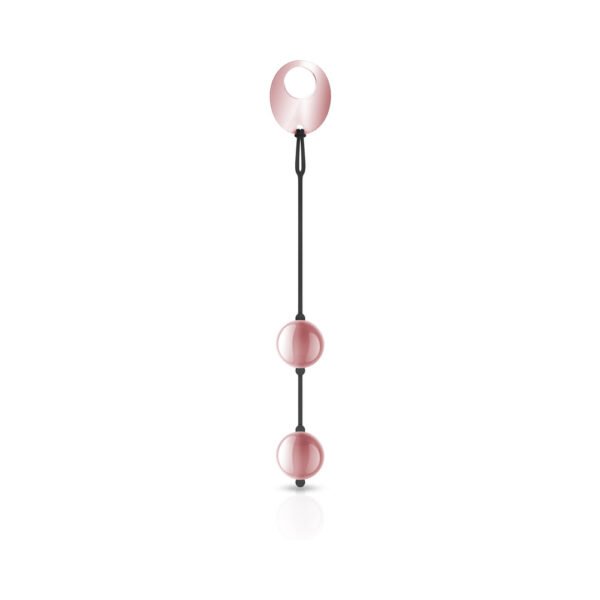
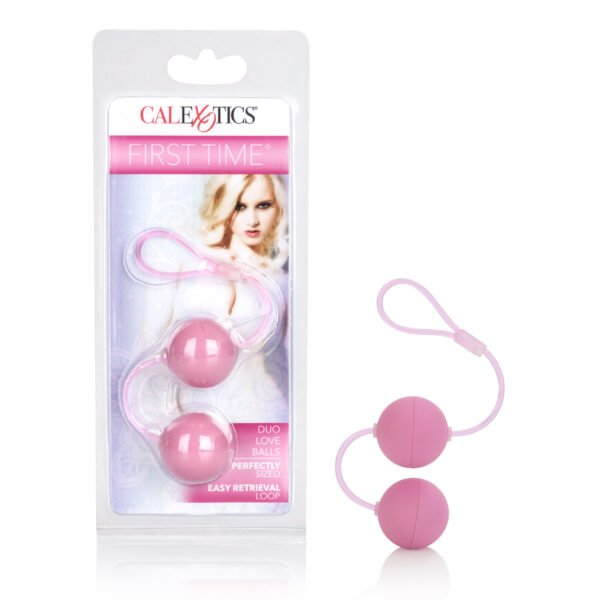
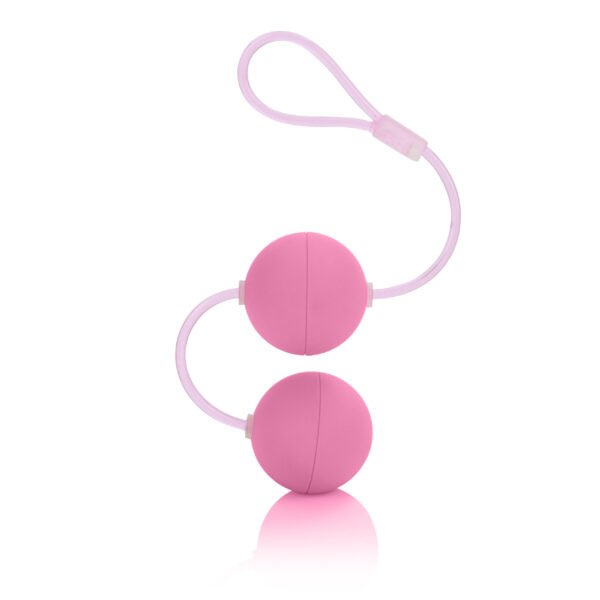
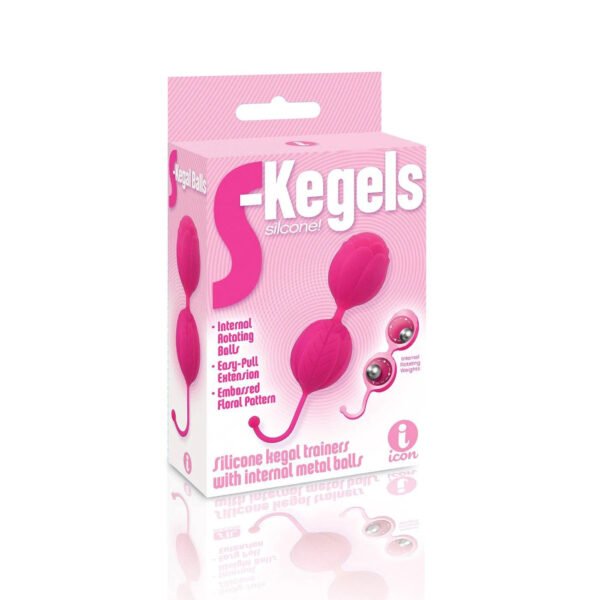
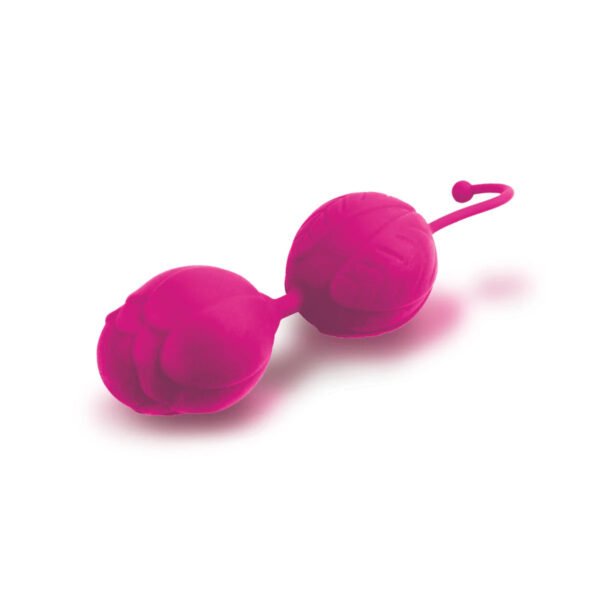
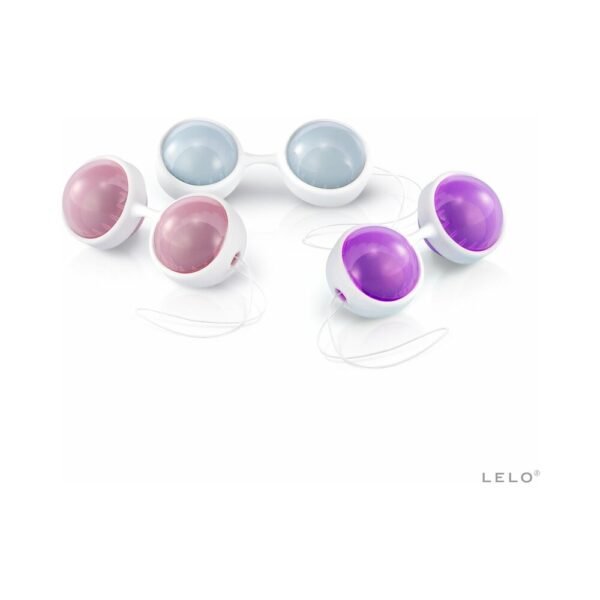
- Connected double-ball design. Two balls joined by a flexible connector and a retrieval cord. The movement between the two balls adds a secondary layer of sensation as you move.
- Vibrating kegel balls. Single or double-ball designs with a built-in vibration function, used more for pleasure than for structured pelvic floor training.
- Smart biofeedback devices. App-connected devices that track muscle contractions in real time and guide you through training sessions with visual or audio feedback.
You may also see products marketed as geisha balls, love balls, jiggle balls, or orgasm balls. These are all variations on the same basic design.
One note on yoni eggs, which are sometimes grouped with kegel balls: jade and crystal eggs are porous materials, and their safety for internal use is not confirmed in the same way as nonporous options. They are worth approaching with caution.
Kegel balls are designed for people with a vagina who want to support pelvic floor strength, work on bladder control, or increase body awareness and sexual pleasure. They are not a one-size-fits-all tool, and choosing the right form factor matters. Body-safe materials are an important part of that choice, covered in detail in the next part of this guide. You can also browse kegel and Ben Wa ball options to get a sense of what is currently available, or explore beginner-friendly options if this is your first time considering a device like this.
Choosing the Right Kegel Balls: Size, Weight, and Material
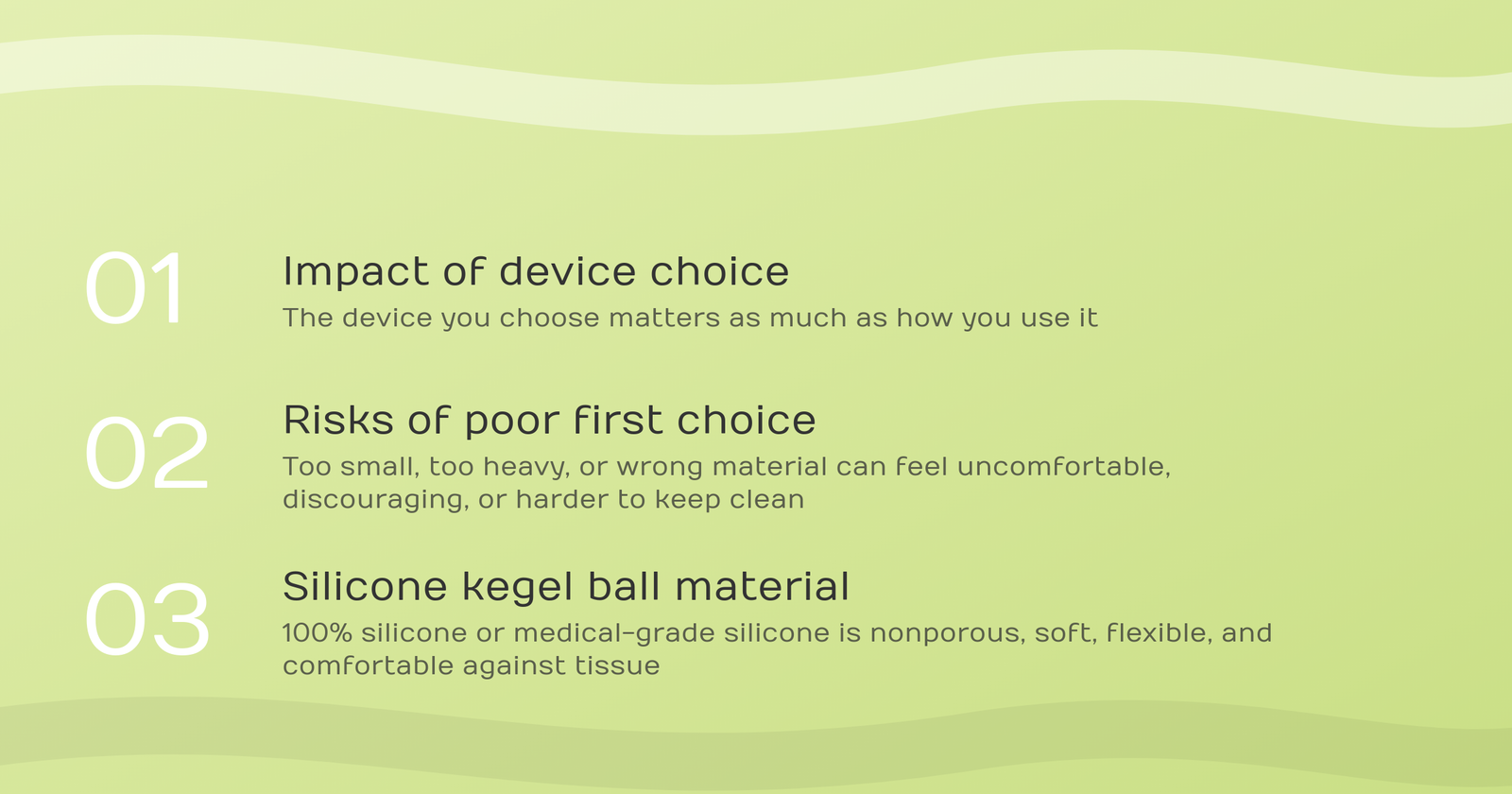
The device you choose matters as much as how you use it. A first-time user who picks something too small, too heavy, or made from the wrong material is likely to find the experience uncomfortable, discouraging, or harder to keep clean. Getting the basics right before you buy makes everything else easier.
Size and Weight: Where Beginners Go Wrong
Start larger and lighter than you think you need. This surprises a lot of people, but it makes anatomical sense: a larger-diameter ball sits more naturally against the pelvic floor muscles and requires less active effort to retain. A smaller ball demands more precise muscle control to hold in place, which is a skill that comes with practice, not something a beginner should be working against from the start.
Weight follows the same logic. A lighter ball gives your pelvic floor something to respond to without overwhelming muscles that may not yet have the endurance for sustained effort. Heavier weighted kegel balls are for gradual progression, once your muscles have built some baseline strength and you can comfortably hold a lighter device during light movement at home.
Choosing a lighter, larger-diameter ball for your first device is not the cautious option; it is the correct one. Heavier and smaller is harder, not more effective, for someone just starting out.
For form factor, a single-ball design is generally the most beginner-friendly. A connected double-ball set adds a small amount of internal movement as you shift your weight, which can make the device slightly more stimulating but also a little more demanding to retain. Either can work for a first-time user, but if you are uncertain, start with a single ball.
Empty your bladder before inserting any device, and note that some users find certain contraindications apply to them; the safety section of this guide covers those in full.
Which Materials Are Body-Safe?
Body-safe means nonporous: a surface with no microscopic gaps where bacteria, moisture, or residue can hide between uses. This is the single most important material property to understand when buying any intravaginal device.
Most sexual wellness products, including kegel balls and ben wa balls, are not regulated as medical devices in the United States. Because FDA oversight of most intimate products is limited, the responsibility for verifying material safety falls on the person purchasing, not the manufacturer. That makes knowing which materials to look for, and which to avoid, genuinely important.
- 100% silicone or medical-grade silicone. The most popular body-safe choice for good reason. Silicone is nonporous, soft, flexible, and comfortable against tissue. Look for products explicitly labeled 100% silicone; “silicone blend” or “silicone feel” are not the same thing and may indicate a porous material underneath.
- Stainless steel. Nonporous, durable, and easy to clean. Stainless steel kegel balls tend to be heavier for their size, which makes them better suited to users who have already progressed past beginner weights. If you are drawn to premium materials, medical-grade stainless steel and silicone devices from reputable manufacturers are worth the investment.
- Borosilicate glass. Nonporous and smooth, with a firm feel similar to stainless steel. Look for products that specify borosilicate rather than generic glass.
- Hard ABS plastic. Nonporous when manufacturer-confirmed as body-safe. This material is commonly used in the outer shell of double-ball sets with an internal weighted core. It is a reasonable choice if the product documentation clearly states body-safe ABS.
Materials to avoid, or approach with significant caution, include rubber, jelly rubber, PVC, and blended materials labeled TPE or TPR. These are porous. No matter how thoroughly you clean a porous surface, the microscopic structure can retain moisture and bacteria that soap and water cannot fully reach. Laboratory testing has detected phthalates in some products made with unclear or poorly labeled materials, which is an additional reason to avoid anything without clear material disclosure.
Uncoated or unlabeled metals are also worth avoiding unless you can confirm the composition and coating integrity from the manufacturer directly.
A brief word on yoni eggs: jade and crystal are popular, but neither material has been confirmed nonporous through standardized testing. Because you cannot verify their surface structure the way you can with silicone or borosilicate glass, they are not recommended as a substitute for purpose-made kegel balls or vaginal weights.
Passive Weighted Balls vs. Smart Biofeedback Devices
Passive weighted balls and smart biofeedback devices both engage the pelvic floor, but they work differently and suit different users.
| Feature | Passive Weighted Balls | Smart Biofeedback Device |
|---|---|---|
| How it works | Weight creates passive resistance; muscles engage to retain the device | Sensors detect contractions and send data to a paired app in real time |
| User feedback | None; you rely on your own body awareness | Visual or audio feedback on contraction strength, timing, and progress |
| Best for | General pelvic floor awareness and gradual strengthening | Users who want guided training, measurable progress, or structured exercise programs |
| Beginner suitability | Yes, with correct size and weight selection | Yes, though the learning curve includes the app and device setup |
| Price range | Generally lower | Higher; reflects sensor technology and app development |
| Maintenance | Straightforward; depends on material | Requires care around charging ports and electronic components |
Passive weighted balls are the more straightforward starting point. You insert them, move around gently, and your pelvic floor muscles respond naturally to keep the device in place. There is no app to configure, no data to interpret, and nothing to charge. For most first-time users, this simplicity is an advantage.
Smart biofeedback devices add a layer of guided structure. The internal sensors detect when you contract and how strongly, and the paired app translates that into visual feedback, often in the form of a game or progress tracker. This can be genuinely useful for people who want to know whether they are contracting correctly or who find structured programming more motivating than self-directed practice. The tradeoff is cost, setup, and the added complexity of caring for a device with electronic components.
Neither type is inherently superior. The right choice depends on what you actually want from the experience: quiet, simple resistance training or guided, data-informed exercise. Either way, material quality matters equally for both.
One material consideration that applies to both types: lubricant compatibility depends on what your device is made from. Water-based lubricant is universally safe across all materials. Silicone-based lubricant should not be used with silicone devices, as it can degrade the surface over time.


How to Use Kegel Balls Step by Step
Learning how to use kegel balls comes down to three things: preparing carefully, inserting with the right technique, and removing without rushing. Each step is simple once you know what to expect.
Inserting Kegel Balls Correctly
Before you do anything else, wash your hands thoroughly with soap and warm water. Wash the device the same way. Then use the bathroom and empty your bladder. A full bladder makes insertion uncomfortable and can create a false sense of pressure once the device is in place.
Check the retrieval cord before every use. Run your fingers along it and give it a gentle tug. It should feel firmly attached, with no fraying, thinning, or looseness near the junction with the ball. If anything feels off, do not use the device until you have inspected it more closely or replaced it.
Apply a generous amount of water-based lubricant to the ball itself, covering the surface evenly. If you want to explore different lube options before settling on one, the lubricants category is a good place to compare. A brief note: silicone-based lube should not be used with silicone devices, but that is the only compatibility detail worth keeping in mind here.
Insertion follows the same basic approach as inserting a tampon, as described in clinical guidance: lie back or stand with one foot raised, breathe out slowly, and let the pelvic floor muscles relax completely. Tension is the main reason insertion feels difficult. When the muscles soften, the vaginal opening widens naturally.
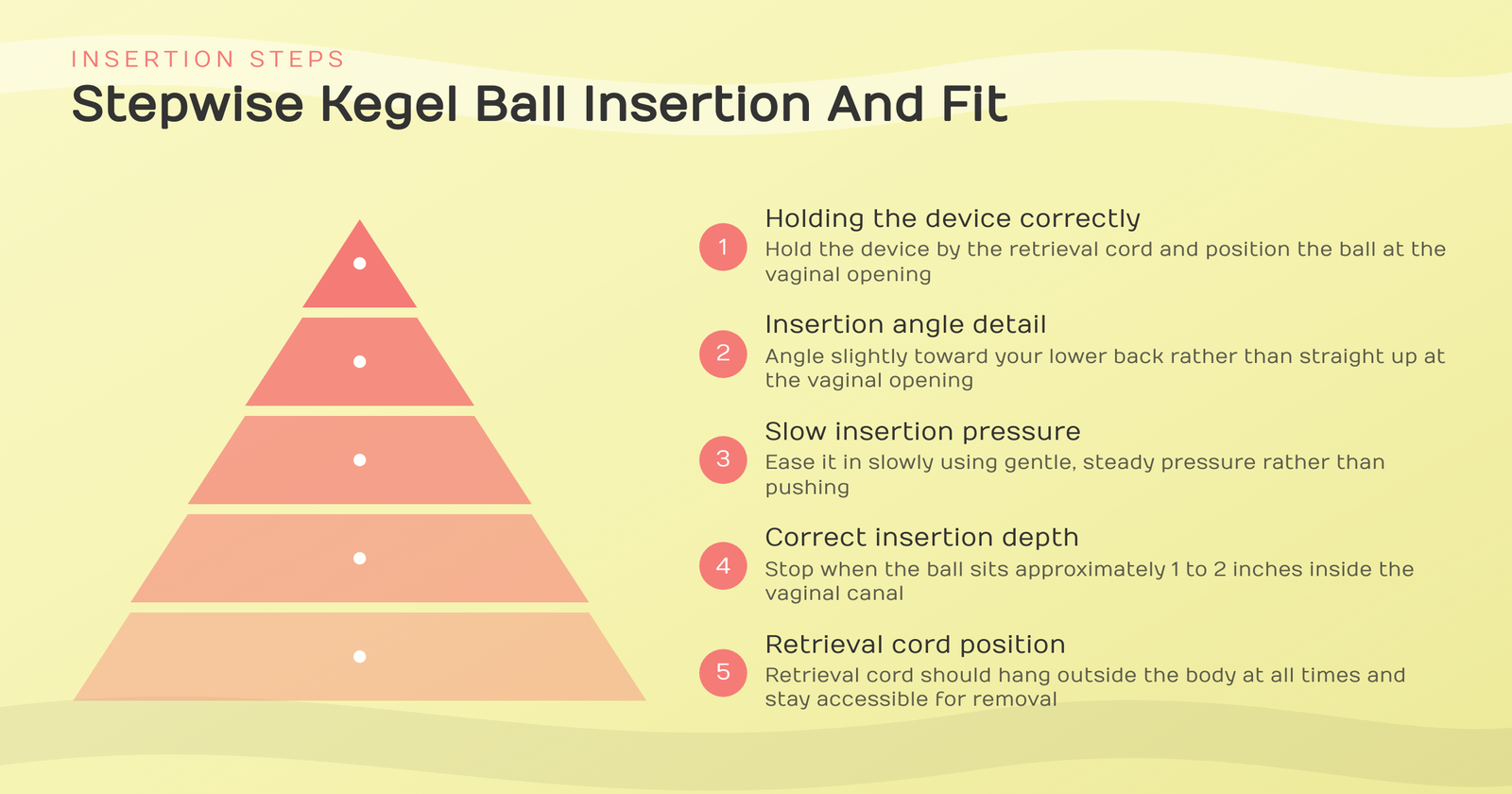
- Hold the device by the retrieval cord. Position the ball at the vaginal opening, angled slightly toward your lower back rather than straight up.
- Ease it in slowly. Use gentle, steady pressure rather than pushing. The ball should slide in without force.
- Guide it to the correct depth. Stop when the ball sits approximately 1 to 2 inches (3 to 5 cm) inside the vaginal canal. The retrieval cord should hang outside the body at all times.
- Leave the cord where it is. Do not try to tuck it inside. It needs to stay accessible for removal.
If you feel resistance or discomfort at any point, stop. Pain during insertion is a signal to pause and reassess, not push through.
What Correct Fit and Depth Should Feel Like
When kegel balls are positioned correctly, you should feel very little. The device sits securely inside the vaginal canal without pressing on the bladder, creating urgency, or causing any sharp sensation. It should not feel like it is about to slip out on its own, and it should not feel lodged or uncomfortable.
A well-fitted device at the right depth stays in place during light movement without effort on your part. If you have to actively squeeze to keep it in, or if it keeps sliding toward the opening, that is useful information: the size or weight may not be right for where your pelvic floor is today.
Here is what different fit experiences tend to mean:
- Secure and barely noticeable. This is the goal. The ball sits in place, the cord hangs outside, and you can move around without thinking about it.
- Slipping out or difficult to retain. The ball may be too small or too heavy for your current muscle strength. Try a larger diameter or a lighter weight.
- Pressure, urgency, or discomfort. This can mean the device is positioned too close to the bladder, or that the size is not a good match. Remove it, rest, and reassess before trying again.
- Immediately expelled. This is more common than people expect and is not a failure. It simply means the muscles need a gentler starting point.
For a first session, aim to wear the device for 15 minutes or less. Standing or walking slowly around your home is enough. There is no benefit to wearing kegel balls longer in the beginning, and shorter sessions let you notice how your body responds without overdoing it.
How to Remove Kegel Balls Safely
Removal is straightforward when you stay relaxed. The most common reason removal feels difficult is tension: the pelvic floor muscles tighten in response to discomfort or anxiety, which makes the process harder than it needs to be.
- Find a comfortable position. Lying down, sitting on the toilet, or squatting with your feet flat on the floor all work well. Squatting shortens the vaginal canal slightly, which can make removal easier.
- Breathe out and bear down gently. Use the same mild downward pressure you would use during a bowel movement. This encourages the pelvic floor muscles to release and moves the device toward the opening.
- Pull the retrieval cord slowly. Use a steady, even pull rather than a sharp tug. The ball should move toward you gradually as you continue to bear down and breathe.
- Guide it out at the same angle it went in. Angled slightly downward and toward the back tends to be most comfortable.
If the device does not move easily, stop pulling. Take a breath, change your position, and try bearing down again before resuming. Forcing the cord is not necessary and is not helpful. In the rare case where the ball feels genuinely stuck, the approach is the same: stay calm, shift positions, bear down, and give your muscles time to relax. This situation resolves with patience in almost every case. If it does not resolve after several calm attempts, contact a healthcare provider; there is no need to panic, and it is a straightforward situation for a clinician to assist with.
Once the device is out, you are done with the hands-on part of the session. What comes next is cleaning and storage, which the device needs every single time.


Pelvic Floor Technique and Training Progression
Knowing how to use kegel balls correctly matters less than knowing how to use your muscles correctly. The device is just a tool. The technique is what actually builds strength.
What a Correct Contraction Feels Like
A correct pelvic floor contraction feels like a gentle lifting and squeezing inward, as if you are drawing something up into the body. That is the sensation to look for. It is subtle, internal, and should feel effortless in your surrounding muscles.
What it does not feel like is pushing down or bearing out. Bearing down is the opposite of what you want, and it is one of the most common beginner errors. If you feel pressure moving downward or outward, pause and reset.
The other errors to watch for are just as common:
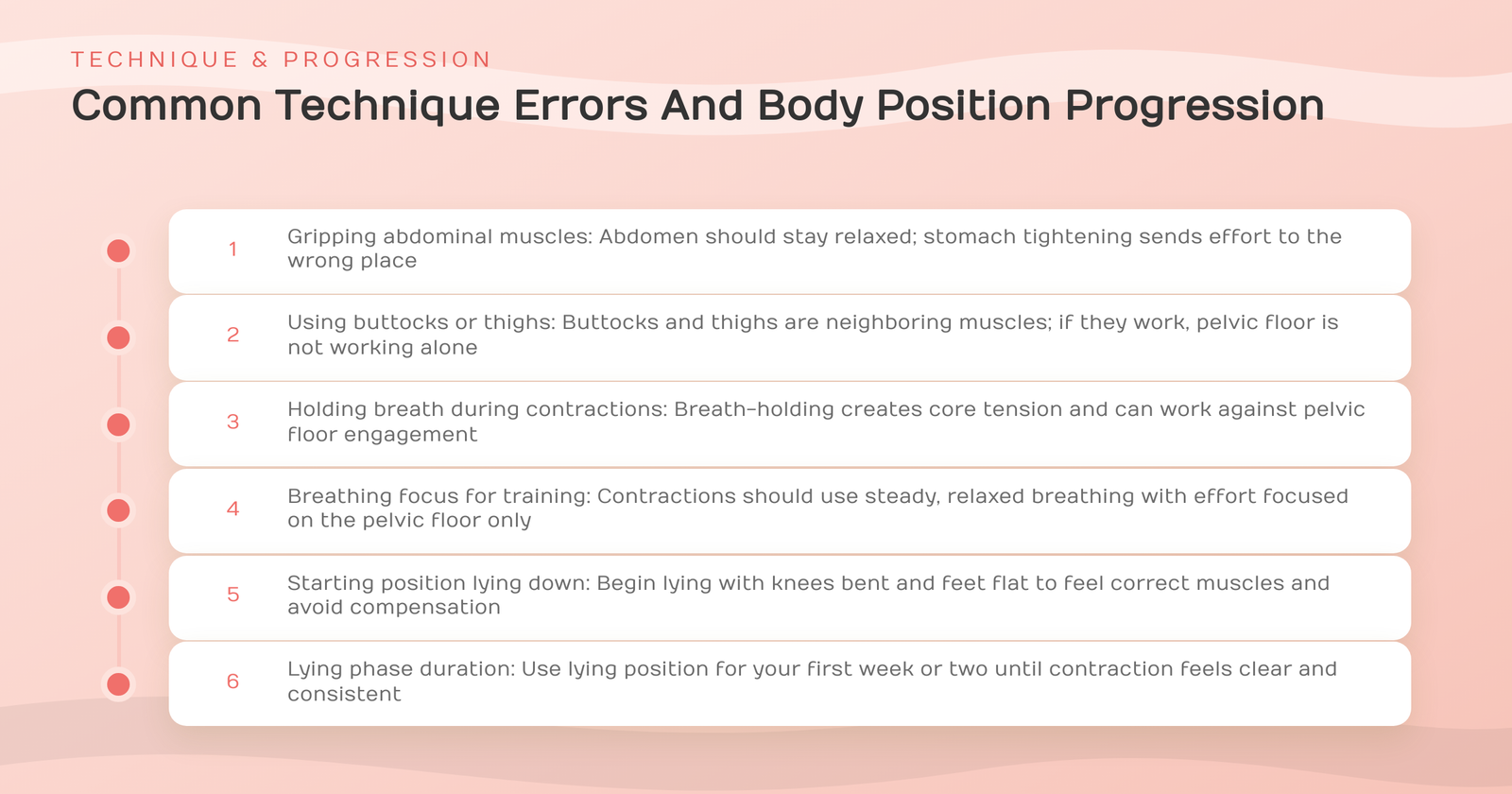
- Gripping your abs. Your abdomen should stay relaxed throughout. If your stomach is tightening, the effort is going to the wrong place.
- Squeezing your buttocks or thighs. These muscles are neighbors, not helpers. If they are working, your pelvic floor is not doing the job alone.
- Holding your breath. Breath-holding creates tension throughout the core and can actually work against pelvic floor engagement. Contractions should be performed with steady, relaxed breathing, focusing the effort on the pelvic floor only.
A useful check: place one hand lightly on your lower abdomen. If you feel it tighten or brace, soften it and try again. The contraction should be invisible from the outside.
Finding the right muscles can take a few tries. Lying down with bent knees is the easiest position to isolate them because gravity is not working against you and surrounding muscles naturally relax. Start there.
Sets, Reps, and a Beginner Progression Plan
The basic framework is simple: hold each contraction for 3 to 5 seconds, rest for an equal amount of time, and aim for 8 to 10 repetitions per set. Clinical guidance recommends holding for approximately that duration, relaxing fully between contractions, and always training with an empty bladder.
Two to three sets per session is enough. More is not better, especially at the beginning.
If 8 to 10 reps feels like too much at first, that is fine. Start with 1 to 2 repetitions and build from there. Pelvic floor muscles fatigue quickly when they are undertrained, and pushing through that fatigue teaches compensation habits rather than strength.
Rest days matter. Training every single day does not give the muscles time to recover and adapt. Three to four sessions per week is a reasonable starting point, with rest days in between.
Overtraining is a real risk and worth understanding. Signs that you are doing too much include muscle fatigue that lingers between sessions, a dull soreness in the pelvic area, or, counterintuitively, an increase in leakage rather than improvement. If any of those appear, reduce your session frequency and give the muscles more recovery time before resuming. Pelvic floor muscles respond to training the same way any other muscle group does: they need both work and rest to grow stronger.
Progression follows a simple positional ladder:
- Lying down. Start here. Knees bent, feet flat. This position makes it easiest to feel the correct muscles and avoid compensation. Use it for your first week or two until the contraction feels clear and consistent.
- Seated. Once you can isolate the contraction reliably while lying down, move to sitting. A firm chair works well. The muscles now work with a little more load.
- Standing. Standing adds more gravitational demand. This is where the device starts to feel more actively engaged because your muscles are working to retain it against gravity.
- Light walking at home. Once standing feels controlled, try gentle movement around your home. This is not the time for errands or long walks; it is about building awareness and control with a small amount of real-world motion.
Wear time follows the same gradual logic. Start with 15 minutes or less per session. As comfort and muscle endurance improve, you can extend that gradually. Longer wear times, up to several hours, are only appropriate for experienced users and depend on the specific device’s manufacturer guidance. That ceiling is not a beginner target.
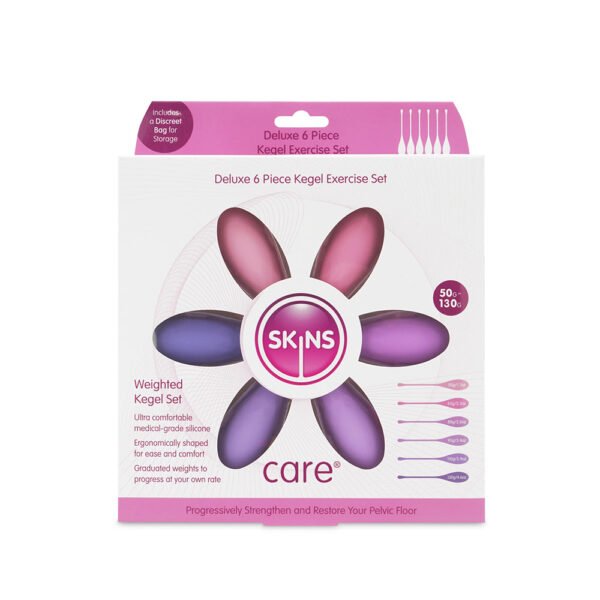
Heavier weighted balls belong to later stages of this progression, not the beginning. As your control and endurance develop, you may want to explore more advanced options; weighted kegel balls vary widely in weight and design, and moving up gradually is the right approach.
If you feel discomfort or pain at any point during a session, remove the device and stop for the day. Pain is not part of the process.



Safety, Contraindications, and Warning Signs
Kegel balls are safe for most healthy adults, but several conditions require medical clearance before you use them, and a handful of symptoms mean you should stop immediately. Knowing both lists before you start is the clearest way to protect yourself.
Who Should Get Medical Clearance First
Talk to your doctor or midwife before using kegel balls if any of the following apply to you:
- Postpartum recovery. Vaginal tissue and pelvic floor muscles need time to heal after birth. Most clinicians advise waiting until your six-week postpartum check and receiving explicit clearance before introducing any intravaginal device.
- Recent pelvic or gynecologic surgery. Procedures involving the vagina, uterus, bladder, or surrounding structures require full healing before any internal device is appropriate. Your surgeon is the right person to set that timeline.
- Active vaginal or pelvic infection. Any current infection, including bacterial vaginosis, a yeast infection, or an STI, needs to resolve completely before use.
- Pelvic organ prolapse. If any pelvic organ has shifted position, self-directed weighted training can worsen the condition. A pelvic floor physical therapist should guide your care instead.
- Pelvic pain conditions. Conditions such as vaginismus, vulvodynia, endometriosis, or interstitial cystitis often involve an overactive or hypertonic pelvic floor. Adding weighted resistance without professional guidance can increase tension rather than relieve it.
- Pregnancy. Intravaginal devices are not recommended during pregnancy without explicit guidance from your care provider.
Warning Signs: Stop Use Immediately
Discomfort during kegel ball use is a signal worth taking seriously. Clinical reviews of vaginal cone use note that some users experience vaginal pain or increased discharge, and these symptoms should not be pushed through. Remove the device and stop your session if you notice any of the following:
- Pain during insertion or while wearing. Kegel balls should not hurt. Pain is not a sign that the muscles are working; it is a sign to stop.
- Pressure or discomfort that does not ease. Mild awareness of the device is normal. Pressure that builds or persists is not.
- Bleeding or spotting. Any unexplained bleeding warrants stopping use and contacting a healthcare provider.
- Difficulty removing the device. If the device does not release easily with gentle bearing down and relaxation, stay calm, try a different position, and seek medical help if it remains stuck. Before each session, check that the retrieval cord is intact and firmly attached; replace the device if the cord shows any fraying or damage.
- Persistent irritation or unusual discharge. Either can signal a reaction to the device material or the beginning of an infection.
When to Work with a Pelvic Floor Physical Therapist
A pelvic floor physical therapist (PFPT) is a specialist who assesses the actual function of your pelvic floor muscles, not just their strength. Self-directed use works well for many people, but professional guidance is worth seeking if you have any of the contraindications listed above, if you experience recurring discomfort, if you are unsure whether your muscles are too tight rather than too weak, or if you have a history of pelvic trauma or surgery. A PFPT can confirm whether weighted training is appropriate for your body and build a program around your specific needs. Starting lighter and shorter, as a general principle, reduces the risk of strain while you find your baseline.
Pelvic Floor Benefits and Pleasure Use
Regular kegel ball use can strengthen and tone the pelvic floor muscles over time, improve body awareness in that part of the body, and for some people, support more satisfying sensation during sex. The research behind these benefits varies in strength, so it helps to know what the evidence actually says.
For bladder control, the picture is genuinely encouraging, if still tentative. Systematic reviews on vaginal cones found they outperformed no treatment for stress urinary incontinence, with results broadly comparable to standard pelvic floor muscle training. The trials behind those findings are small and variable in quality, so this is promising rather than definitive. If bladder leakage is a significant concern for you, a pelvic floor physical therapist can offer a more tailored assessment alongside any device use.
Postpartum recovery is another area where kegel balls are commonly used, though only after a healthcare provider has confirmed it is safe to do so. That timing matters.
One benefit that is harder to measure but consistently reported is increased muscle awareness. Wearing a weighted ball requires the pelvic floor to engage passively to keep it in place. Over time, that gentle feedback helps many people locate and feel those muscles more clearly, which makes intentional contractions more effective. As your strength builds, moving to a slightly heavier weight can help maintain that challenge.
Better pelvic floor tone is also connected to sexual sensation. Stronger, more responsive muscles can intensify orgasms and heighten internal sensation during penetration. This is not guaranteed for everyone, but the relationship between pelvic floor fitness and pleasure is well-established enough to be worth pursuing on its own terms.
For pleasure-focused use specifically, many people wear kegel balls during solo time to heighten body awareness and arousal before or during masturbation. In a partner context, wearing them during foreplay, then removing them before penetrative sex, can be a simple and effective way to increase anticipation. Some couples incorporate them into shared play more directly. If you enjoy exploring that direction, couples vibrators or other sex toys for couples pair naturally with this kind of intentional warm-up.
Exercise-focused use and pleasure-focused use are not mutually exclusive, but they do feel different. Exercise use involves active contractions and deliberate practice. Pleasure use is more passive, more about sensation and presence than reps. Both are valid reasons to use kegel balls, and many people find the two goals reinforce each other over time.
On the practical side: most weighted kegel balls are quiet enough to wear discreetly at home during light activity. Vibrating variants are less discreet, so that is worth factoring in if noise matters to you.


Cleaning, Drying, and Storing Kegel Balls
Wash your kegel balls before the first use and after every single use. This applies regardless of how long you wore them or how clean they feel.
For most nonporous devices, mild soap and warm water is the foundation of a good cleaning routine. Nonporous materials don’t trap bacteria the way softer, porous materials do, which makes thorough cleaning more reliable. Work soap gently around the entire surface, including any seams, the area around the retrieval cord, and the junction between connected balls where residue tends to collect. Rinse completely and make sure no soap remains.
What you can do beyond soap and water depends on the material and whether your device has a motor:
- Non-motorized 100% silicone. You can boil for 3 minutes or run through the top rack of the dishwasher (no detergent) for a deeper sanitize, if the manufacturer confirms this is safe for your specific device.
- Stainless steel and borosilicate glass. Same options apply: boiling or top-rack dishwasher, with manufacturer approval.
- Hard ABS plastic or coated materials. Skip boiling and the dishwasher. Wipe down with a dedicated sex toy cleaner or mild soap and water only. Heat can damage coatings or warp plastic.
- Motorized or electronic devices. Never submerge. Wipe the surface with a damp cloth and toy cleaner, and keep water away from charging ports and seams.
After washing, let the device air dry completely before you put it away. Storing it while damp encourages bacterial growth and can degrade some materials over time. Set it on a clean towel in a spot with good airflow and give it enough time to dry fully.
Store kegel balls in a clean, breathable pouch or case. A dedicated storage pouch keeps the surface clean between uses, protects the retrieval cord from stress, and keeps the device away from direct sunlight and heat, both of which can degrade silicone and other materials. Avoid sealed airtight containers if there is any remaining moisture. For travel, a small zip pouch inside a toiletry bag works well and keeps things discreet.
Do not share devices between users without thorough cleaning first. Even with nonporous materials, shared use carries a risk of transferring bacteria.
On lubricant compatibility: water-based lube is the universally safe choice and works with every material. Silicone-based lubricants are the important exception. They can bond with and degrade silicone toy surfaces, causing the material to become tacky, pitted, or rough over time. Research confirms that silicone-based lubricants can degrade silicone device surfaces and should be avoided with silicone toys. To identify silicone-based products, check the ingredients list: dimethicone, cyclopentasiloxane, or any ingredient ending in “-siloxane” or “-cone” signals a silicone-based formula. Oil-based lubricants should also be avoided; they are harder to clean off the device and increase infection risk. When in doubt, water-based is the right answer.
FAQ
Can I wear kegel balls while walking around in public?
Can I wear kegel balls while walking around in public?
Yes, but not right away. Beginners should build up to public wear gradually, starting with short sessions at home before adding movement or longer durations. When you are ready, a well-fitted device worn for 15 to 30 minutes during light activity is a reasonable starting point. If you feel pressure, discomfort, or the urge to bear down at any point, that is a signal to remove the device and rest.
What should I do if the retrieval cord breaks or feels loose?
What should I do if the retrieval cord breaks or feels loose?
Stay calm first: the vaginal canal is closed at the top, so the device cannot travel further into your body. Squat, bear down gently, and use a clean finger to reach and guide the ball toward the opening. If you cannot retrieve it within a few minutes, or if you feel any pain, contact a healthcare provider. To reduce the risk going forward, check the cord before each use and replace the device if the cord feels frayed, stiff, or insecure.
Do kegel balls actually produce measurable results?
Do kegel balls actually produce measurable results?
Yes, with realistic expectations. Research supports their use for improving pelvic floor awareness and reducing symptoms of stress urinary incontinence, and some studies suggest they perform comparably to standard pelvic floor muscle training for certain people. The evidence is promising but not definitive, and results depend on consistent use, correct technique, and starting from an appropriate weight. If you are ready to get started, kegel and ben wa balls are available in a range of sizes and weights suited to different experience levels.