










The cervix is the narrow, cylindrical lower end of the uterus that extends into the top of the vaginal canal. It has a small opening called the os, and its surface is made up of sensitive tissue called the ectocervix. During arousal, a process known as vaginal tenting causes the uterus to lift and the vaginal canal to lengthen, which typically moves the cervix upward and slightly away from the vaginal opening. That is why the same toy or partner can feel completely different at different points in the arousal cycle, or at different points in the menstrual cycle, when the cervix naturally shifts position.
Whether cervical contact feels pleasurable, neutral, or uncomfortable depends on the person, the moment, and the degree of arousal. There is no universal response. For some people, firm pressure against the anterior or posterior fornix (the areas flanking the cervix at the top of the vaginal canal) can produce a distinct deep sensation; for others, it causes immediate cramping or discomfort. Research on lower abdominal pain after sex has identified deep penetration as a recognized cause, specifically through contact with the cervix.
Does cervical stimulation produce orgasm?
The idea of a “cervical orgasm” circulates widely in wellness content. The actual evidence is more careful. What research supports is that the vagus nerve, which runs independently of the spinal cord, can transmit sensation from the cervix and uterus to the brain, including in people with complete spinal cord injuries. Barry Komisaruk and colleagues have documented this pathway, which is why deep internal sensations are neurologically distinct from clitoral stimulation. Whether this produces orgasm reliably, or at all, varies widely between individuals and is not guaranteed by depth alone.
In practical terms: some people do report uniquely deep or full-body sensations during cervical contact at high arousal. Others find the same contact jarring or painful regardless of arousal level. Both are normal. Neither is a failure.
How the cervix changes position and why it matters for toy use
The cervix does not stay in one place. Its position shifts across:
- The menstrual cycle. Around ovulation, the cervix typically rises higher and softens. Before menstruation, it sits lower and firmer, making deep penetration more likely to result in direct contact or discomfort.
- Arousal. Vaginal tenting during arousal lifts the cervix and expands the canal, creating more functional depth. Without sufficient arousal, the canal is shorter and firmer contact is more likely.
- Anatomy. People vary substantially in vaginal depth. Average functional depth when aroused is roughly 10-12 cm, but individual range is wide.
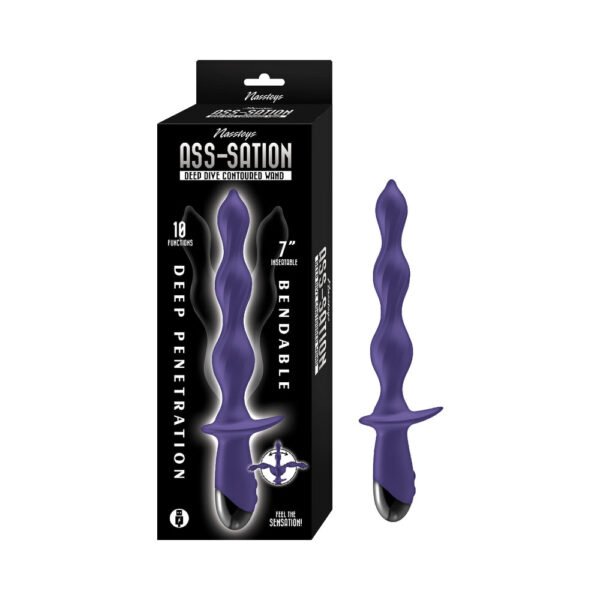
This variability is directly relevant when choosing toys. A toy that feels fine one week may cause discomfort the next. Starting at lower depth and increasing gradually with full arousal is not overcaution; it is how you gather actual information about your own anatomy.
When cervical contact causes pain
Pain from deep penetration is worth paying attention to, not pushing through. Occasional mild discomfort when a toy reaches the top of the vaginal canal without full arousal is common and usually resolves with more arousal time or shallower depth. But persistent or sharp pain during deep penetration can indicate conditions including endometriosis, uterine fibroids, ovarian cysts, or pelvic inflammatory disease. Lower abdominal pain after sex related to deep penetration is a recognized clinical concern and warrants a conversation with a healthcare provider if it recurs.
If a toy consistently causes pain before you reach comfortable depth, the answer is a shorter toy or less insertion, not more warming up and trying harder.