




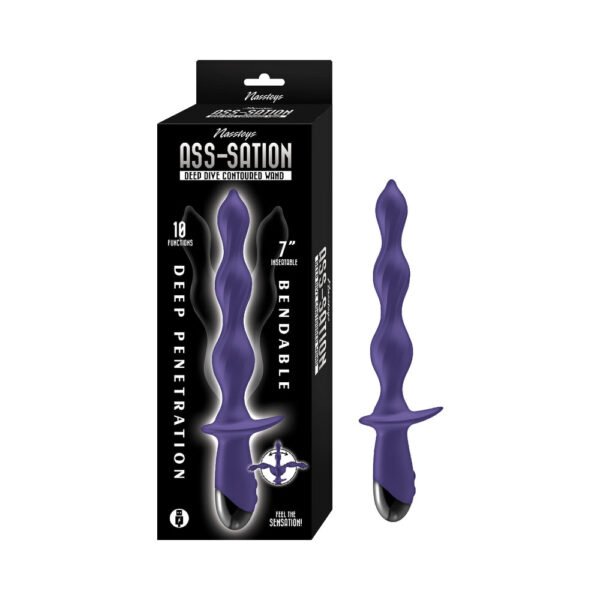




PVC, or polyvinyl chloride, is a synthetic plastic widely used in consumer products, including sex toys. In its raw form it is rigid; softened with chemical plasticizers called phthalates, it becomes the flexible, often rubbery material you will find in budget-priced dildos, vibrators, and “jelly rubber” products. That softening process is central to why PVC matters as a material choice: the plasticizers are not chemically bonded to the polymer chain, which means they can migrate out of the material over time and with use.
Because PVC is porous (its surface contains microscopic channels that absorb fluids), it cannot be fully sterilized between uses. Pathogens, lubricant residues, and bodily fluids get drawn into those channels and are not removed by standard cleaning. This is why material-safety educators consistently classify PVC as a porous material alongside jelly rubber and TPE/TPR, and contrast it with nonporous options such as medical-grade silicone, borosilicate glass, and surgical stainless steel.
Why the Phthalate Question Matters
The plasticizers most commonly used to soften PVC for intimate products are phthalates, a class of chemicals that function as endocrine disruptors. Research and independent testing have detected phthalates including DEHP, DINP, and DBP in flexible PVC toys, and because these compounds are not bound to the plastic matrix, they can leach under the conditions of actual use: body heat, oil-based lubricants, and sustained contact.
Phthalates are regulated in the EU under REACH and in the US under CPSIA, but those rules center primarily on children’s products. Adult sex toys occupy a regulatory gap in most jurisdictions. ISO 3533:2021, the first international safety standard for manufactured sex toys, addresses material biocompatibility and labeling, but sets no fixed numeric chemical limits, instead requiring manufacturers to reference regional laws. In practice, “phthalate-free” as a label on a toy carries no independently verified guarantee.
The honest read on the evidence: measurable leaching from PVC intimate products has been documented. Whether routine mucosal exposure at real-world quantities produces clinical harm remains an open question in the literature. What is not in question is that the leaching happens, and that nonporous alternatives avoid it entirely.
Identifying PVC in the Wild
PVC toys are rarely labeled as PVC. Common descriptors that usually indicate a PVC or PVC-blend formulation:
- “Jelly rubber” or “jelly.” The most frequent euphemism for phthalate-softened PVC.
- “UR3,” “Cyberskin,” “Ultraskin,” “Fanta Flesh.” Proprietary material names that often describe TPE/TPR blends, but are sometimes applied to PVC-adjacent formulations. These names are unregulated.
- “Soft realistic” with no named base material. A catch-all that warrants skepticism.
- A chemical or rubbery odor out of packaging. Off-gassing is a documented characteristic of plasticizer-heavy PVC products.
- Visible surface tackiness or staining after storage. PVC degrades as plasticizers migrate, leaving the surface sticky and discolored.
If a product listing does not specify the base material clearly, or uses vague language like “novelty material,” assume porosity until proven otherwise.
Using PVC Toys More Safely
If you already own a PVC toy and choose to continue using it, a few practices reduce exposure risk:
- Use a condom over the toy every time. A properly fitted condom creates a nonporous barrier between the material and mucous membranes. This is the single most effective harm-reduction step for porous toys.
- Use only water-based lubricant. Oil-based lubricants accelerate plasticizer migration. Silicone-based lubricants can further degrade the surface. Water-based lube is the safest pairing.
- Keep it single-partner. Porous materials cannot be sterilized between users. Sharing a porous toy without a fresh condom carries a genuine STI transmission risk.
- Inspect the surface regularly. Any stickiness, cracking, color change, or intensified chemical smell means the material is actively degrading. At that point, replace it.
- Store separately. Soft PVC reacts chemically with other materials, especially other flexible toys. Contact can cause both to degrade faster.
Body-Safe Alternatives
For people moving away from PVC, the four materials that sex-health educators consistently flag as nonporous and chemically stable are:
- Medical-grade (platinum-cured) silicone. Flexible, available in a wide range of shapes and firmnesses, phthalate-free, and cleanable with soap and water or a sex toy cleaner. Pair with water-based lubricant; silicone-based lube can degrade the surface.
- Borosilicate glass. Hard, nonporous, and fully sterilizable. Compatible with any lubricant. Temperature-responsive. Products include glass dildos.
- Surgical stainless steel. Extremely durable, hypoallergenic, and fully sterilizable. Also lubricant-universal.
- ABS plastic. The hard plastic used in most vibrator shells and bullet casings. Nonporous and phthalate-free, though not heat-sterilizable; soap and water or a toy cleaner is appropriate.